
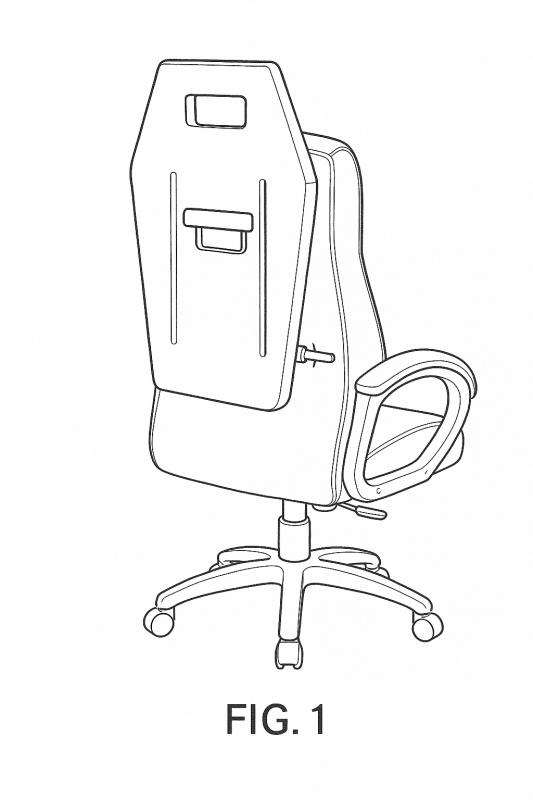
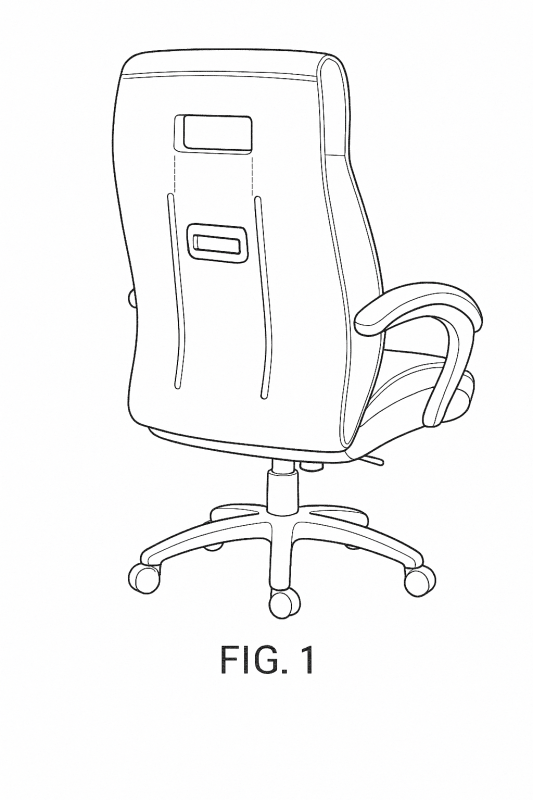
This design integrates a detachable ballistic shield seamlessly into the back of a high-back office or classroom chair. From all angles, the chair appears like a standard chair, with only a discreet horizontal handle visible on the rear surface. The shield is secured inside the chair by a locking mechanism, which must be pressed to disengage.
Once unlocked, the shield can be withdrawn vertically through an opening at the top of the chair back, similar to bread rising from a toaster. The handle serves dual purposes: in normal use, it functions as a convenient grip to move the chair, and in emergency use, it allows the shield to be quickly pulled free.
The shield can be used in two defensive modes:
-
Stationary Cover – The shield remains in place within the chair, allowing the user to crouch or hide behind the chair for immediate protection.
-
Mobile Protection – By releasing the lock and pulling the handle upward, the shield can be removed and carried, giving the user portable cover while navigating to a secure exit, locking or unlocking doors, or guiding others to safety.
This system provides an invisible layer of security without altering the familiar appearance of a classroom or office environment, while ensuring teachers or staff can quickly deploy protective measures when necessary.
CHAIR‑INTEGRATED DETACHABLE SHIELD WITH TOP‑EXIT SLOT
Applicant/Assignee: [Applicant]
Inventor(s): [Name(s)]
Application No.: [TBD]
Filing Date: [TBD]
Priority: [If claiming provisional, insert details]
International Class: A47C; F41H; A61B (others as appropriate)
ABSTRACT
A chair with a high backrest conceals a thin protective shield within a vertical cavity of the backrest. The chair appears conventional from all angles with the exception of a discrete rear handle coupled to the shield and a single top exit opening. A locking mechanism retains the shield in a stowed position for normal chair use. Upon actuation of a release, the shield is withdrawn vertically through the top opening, analogous to bread rising from a toaster, by grasping the rear handle. Guide structures within the cavity constrain shield motion, align a crossbar handle via narrow vertical slots, and stabilize the shield so the chair itself can serve as stationary cover. The system provides immediate stationary protection and rapid transition to mobile protection for securing entry points or evacuating occupants.
FIELD OF THE INVENTION
The invention relates to personal protective equipment integrated into furniture, and more particularly to a detachable ballistic or impact‑resistant shield stowed within a chair back and deployable through a top exit slot.
BACKGROUND
Classrooms and offices commonly include high‑back chairs that offer no integrated means of immediate protection. Stand‑alone shields take space, draw attention, and are often not within arm’s reach when needed. There is a need for a non‑obtrusive, always‑present protective device that looks like ordinary furniture yet can be deployed in seconds, and that also allows either stationary cover or mobile cover while navigating to secure or exit an area.
SUMMARY
The invention provides a chair‑integrated shield comprising:
-
A chair with a high backrest defining an internal cavity accessible only through a top exit opening.
-
A thin protective shield sized to slide within the cavity in a stowed configuration.
-
A rear crossbar handle coupled to the shield and exposed through two narrow rear alignment slots, allowing the handle to be grasped while the shield is stowed.
-
At least one locking mechanism (e.g., spring latch, push‑button, keyed or electronic release) that retains the shield until deliberately actuated.
-
Guide rails/tracks and bottom and/or lateral stops within the cavity that guide and stabilize the shield during insertion, stowage, and extraction.
From any side the chair appears standard, with the only visible elements being the rear handle and subtle slot outlines. When the release is actuated, the user grasps the handle and withdraws the shield upward through the top opening. The chair may itself be used as a stationary barrier with the shield stowed; alternatively the shield is removed to provide mobile protection while moving to lock/unlock doors or scout an evacuation route.
Optional features include a viewport (ballistic window), integrated task/inspection light, camera, strap or forearm brace, detent indexing, sensor‑triggered tamper indicator, and retrofit brackets for existing chairs.
BRIEF DESCRIPTION OF THE DRAWINGS
(Figures referenced below correspond to the drawings you’ve created. You can relabel to match your figure set.)
-
FIG. 1 – Rear perspective view of the chair showing the top exit opening, two vertical alignment slots, and the exposed crossbar handle of the shield in the stowed position.
-
FIG. 2 – Exploded rear view showing the shield aligned with the backrest cavity, guide rails, and release button/latch.
-
FIG. 3 – Cross‑sectional view through the backrest showing the toaster‑like slot cavity, internal guides, latching interface, and top lip.
-
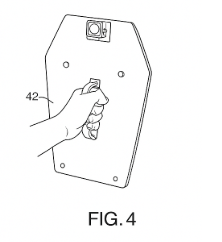
FIG. 4 – Operational view: user pressing the release and sliding the shield upward via the handle.
-
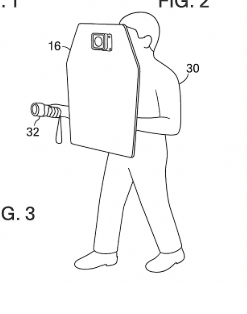
FIG. 5 – Shield removed and held in front of the user; optional viewport and accessory light illustrated.
-
FIG. 6 – Detail of the locking mechanism and detent.
-
FIG. 7 – Retrofit bracket assembly for an existing chair back.
REFERENCE NUMERALS
-
10 chair; 12 base/casters; 14 seat; 16 backrest; 18 armrest
-
20 internal cavity; 22 top exit opening; 24a/24b rear alignment slots
-
26 shield panel; 28 rear crossbar handle; 30 guide rails/tracks
-
32 latch/release button; 34 latch catch; 36 bottom stop
-
38 viewport/eyepiece (optional); 40 task/inspection light (optional)
-
42 handle recess; 44 cushioning/trim panel; 46 friction‑reduction liner
-
48 detent/indexing feature; 50 spring element; 52 accessory strap/brace
-
54 retrofit bracket; 56 wiring/sensor (optional); 58 top lip/hood
-
60 tamper indicator (optional); 62 cover seam/zipper (optional upholstery variant)
DETAILED DESCRIPTION OF PREFERRED EMBODIMENTS
Overall Configuration
Referring to FIGS. 1–4, chair 10 includes a backrest 16 enclosing an internal cavity 20 opening only at its top exit opening 22. The cavity is sized and shaped to receive shield 26. In the stowed position, the shield is fully concealed within backrest 16 such that the chair appears conventional 360° about its perimeter. The only visible elements are (i) the rear crossbar handle 28, which is exposed through two narrow alignment slots 24a/24b, and (ii) the subtle outline of top opening 22.
Shield and Guide System
Shield 26 is a thin, generally planar panel with a thickness appropriate to the desired protection level. The panel may be flat or slightly concave to mate with the interior of the chair back. Guide rails 30 and liner 46 constrain the shield to linear travel, minimize rattle, and distribute loads into the chair frame. A bottom stop 36 prevents over‑insertion; a top lip/hood 58 visually conceals the opening and provides a grasp clearance when the shield is partly elevated.
The crossbar handle 28 resides within a handle recess 42 in the shield. In the stowed configuration, handle 28 projects through alignment slots 24a/24b, permitting the user to grasp the handle while also preventing lateral twisting of the shield. This dual‑slot interaction resists torque and stabilizes the shield during both stationary and mobile use.
Locking/Release
A spring‑biased latch 32 engages a catch 34 on the shield. To deploy, the user actuates latch 32 (push, pull, or squeeze), disengaging the catch. With the other hand (or same hand), the user grips handle 28 and slides shield 26 upward through the top opening 22. Optional detent 48 offers tactile indexing at stowed and semi‑deployed positions. Latch 32 may be manual, keyed, coded, or electronically controlled; optional sensor 56 and indicator 60 can signal deployment or tampering.
Modes of Use
-
Stationary Cover: With the shield stowed, the chair can be positioned between the user and a threat; the shield’s mass and rigidity, constrained by guides 30 and slots 24a/24b, provide immediate cover without extraction.
-
Mobile Cover: When movement is needed, the user releases latch 32 and withdraws the shield completely for handheld use (FIG. 5), optionally employing strap/brace 52.
Optional Features
-
Viewport/Eyepiece 38: A ballistic window or periscope‑style aperture may be provided near the top of the shield.
-
Illumination/Camera 40: A low‑profile light and/or camera can aid navigation in low light and document events.
-
Upholstery Variant: A concealed cover seam 62 or zipper allows service access while preserving a conventional exterior.
-
Retrofit Brackets 54: FIG. 7 shows a kit that couples rails 30 and latch 32 to an existing chair back.
EXAMPLE MATERIALS AND DIMENSIONS (NON‑LIMITING)
-
Shield 26:
-
Laminated construction with aluminum or magnesium alloy face sheets and UHMWPE/aramid composite core for ballistic resistance; or all‑composite layup.
-
Thickness: about 6–15 mm (depending on rating); planar mass tailored to desired protection (e.g., NIJ levels).
-
Optional anti‑spall layer on the strike face.
-
-
Chair Back/Cavity:
-
Structural frame: steel, aluminum, or reinforced polymer.
-
Guide rails 30: extruded polymer or aluminum with liner 46 (felt or PTFE) for silent sliding.
-
Latch 32: spring‑loaded steel, die‑cast, or polymer with positive tactile feedback.
-
-
Ergonomics:
-
Handle 28 centered near shield CG for balanced lift.
-
Opening 22 width > panel thickness + clearance (e.g., panel thickness + 1–2 mm each side).
-
Optional counterbalance spring 50 or gas‑assist to reduce extraction force.
-
(Performance depends on materials and construction; actual ballistic rating must be validated by standardized test methods.)
ADVANTAGES
-
Inconspicuous: Looks like a normal chair from every angle; no visual clutter in classrooms.
-
Always at hand: Deployed in seconds with a single, intuitive motion.
-
Two modes: Stationary cover (chair as barrier) and mobile cover (handheld shield).
-
Ergonomic: Rear handle doubles as a convenient chair‑moving grip.
-
Scalable: Works with new builds or retrofits to existing chairs.
ALTERNATIVE EMBODIMENTS
-
Top‑only aperture (preferred) vs. top with hidden service seam.
-
Different locking mechanisms: magnetic, rotary cam, keyed, solenoid, PIN keypad.
-
Different shield shapes: hexagonal, trapezoidal, contoured, or concave profiles.
-
Accessories: door wedge, radio pouch, quick‑attach forearm strap, transparent riot‑style panel, or standoff feet.
-
Smart features: accelerometer to record deployment, BLE tag for inventory, visible indicator for “armed/unlocked” state.
MANUFACTURING & ASSEMBLY NOTES
-
Pre‑assemble rail module (rails 30, latch 32, bottom stop 36) to a rigid retrofit bracket 54; fasten as a unit to chair frame.
-
Install liner 46 to reduce noise and wear.
-
Upholster over the assembly leaving only alignment slots 24a/24b and the top opening 22 exposed or discreetly trimmed.
-
Verify shield travel clearances and latch engagement prior to final upholstery closure.
CLAIMS
1. Apparatus (Independent)
-
A chair comprising:
a backrest defining an internal cavity;
a single top exit opening communicating with the cavity;
a protective shield sized to slide within the cavity between a stowed position and a deployed position;
a handle coupled to the protective shield and accessible at a rear side of the backrest;
a locking mechanism configured to retain the protective shield in the stowed position; and
guide structures within the cavity that constrain motion of the protective shield along a path toward the top exit opening;
wherein actuation of the locking mechanism permits the protective shield to be withdrawn vertically through the top exit opening by pulling the handle.
2–20. Dependent Claims (examples)
-
The chair of claim 1, wherein the rear side of the backrest further includes two narrow vertical alignment slots through which portions of the handle extend, the slots cooperating with the handle to resist lateral rotation of the protective shield.
-
The chair of claim 1, wherein the protective shield includes a recess receiving the handle such that the handle is substantially flush with the rear side when the shield is stowed.
-
The chair of claim 1, wherein the guide structures comprise opposed rails and a bottom stop.
-
The chair of claim 1, wherein the locking mechanism comprises a spring‑biased latch engaging a catch on the protective shield.
-
The chair of claim 5, further comprising a manual push‑button coupled to the spring‑biased latch.
-
The chair of claim 1, wherein the protective shield includes a ballistic viewport proximate an upper portion of the shield.
-
The chair of claim 1, wherein the protective shield includes an illumination device selected from a light, strobe, or camera.
-
The chair of claim 1, wherein the backrest and protective shield are shaped so that the chair appears visually conventional from 360 degrees.
-
The chair of claim 1, wherein the protective shield comprises laminated metallic face sheets and a fiber‑reinforced composite core.
-
The chair of claim 1, further comprising a detent indexing the protective shield at the stowed position.
-
The chair of claim 1, wherein the handle serves as a chair‑moving grip when the shield is stowed.
-
The chair of claim 1, wherein the guide structures include low‑friction liners.
-
The chair of claim 1, wherein the locking mechanism is electronically controllable and further comprises a sensor that signals deployment.
-
The chair of claim 1, wherein the top exit opening is concealed by a top lip that overhangs the opening while permitting shield extraction.
-
The chair of claim 1, wherein the protective shield is concave to nest against the backrest.
-
The chair of claim 1, further comprising an arm strap or forearm brace on the protective shield for handheld use after deployment.
-
The chair of claim 1, wherein the protective shield is removable and re‑insertable through the top exit opening without tools.
-
The chair of claim 1, wherein the locking mechanism is child‑resistant and requires two motions to release.
-
The chair of claim 1, wherein the protective shield is usable as stationary cover while stowed and mobile cover when removed.
21. System Claim
-
A protection system comprising the chair of claim 1 and retrofit hardware configured to mount the guide structures and locking mechanism to an existing chair back.
22–26. Method Claims
-
A method of providing immediate protection to a user, comprising:
positioning a chair according to claim 1 between the user and a threat while the protective shield remains stowed;
actuating the locking mechanism; and
withdrawing the protective shield vertically through the top exit opening by pulling the handle to provide mobile cover. -
The method of claim 22, further comprising guiding occupants toward an exit while holding the protective shield in front of the user.
-
The method of claim 22, further comprising locking or unlocking an entry point while maintaining cover with the protective shield.
-
The method of claim 22, further comprising re‑inserting the protective shield into the chair back through the top exit opening after the event.
-
The method of claim 22, further comprising illuminating a path with an illumination device mounted to the protective shield.
27–30. Kit/Retrofit Claims
-
A retrofit kit for converting an existing chair into a chair‑integrated protective shield system, comprising: a pair of guide rails, a locking mechanism configured to mount to a chair back, a bottom stop, and a protective shield with a handle sized to slide within a cavity of the chair back and exit through a top opening.
-
The kit of claim 27, further comprising mounting brackets and trim components to create two rear alignment slots and a top exit opening.
-
The kit of claim 27, further comprising instructions specifying installation with the existing upholstery so that the chair appears conventional.
-
The kit of claim 27, wherein the locking mechanism includes a manual push‑button latch and a detent indexing the stowed position.
CONCLUSION
The disclosed chair‑integrated, top‑exit shield system offers unobtrusive, instantly deployable protection. Variations in materials, shapes, and mechanisms fall within the scope of the appended claims.
SUMMARY
Detachable Shield Chair — Top‑Exit Slot Design
A high‑back chair hides a thin protective shield inside the backrest. From all sides it looks like a normal chair. A small rear handle—part of the shield—sticks out through two vertical slots. Press a release button, grab the handle, and the shield slides straight up out of the top (think bread rising in a toaster). Use the chair as immediate stationary cover, or pull the shield free for mobile protection while securing doors or guiding people to safety. Optional viewport
The Chair That Turns Into a Shield: A Simple, Powerful Layer of Protection for Classrooms, Banks, and Public Venues
Elevator pitch (2 sentences):
This is a high‑back chair that looks completely ordinary—until you press a small release button. Then, a thin, ballistic‑rated shield slides straight up out of the top (like bread rising from a toaster), giving instant cover you can use while stationary or carry as you move to secure doors and lead people to safety.
Why a Chair?
When seconds matter, protection needs to be where people already are—not in a closet, not down the hall, and not locked behind a case. A teacher, teller, or speaker on a stage is almost always near a chair. That makes the chair the perfect, non‑intimidating place to hide a lifesaving tool that’s instantly accessible and easy to understand.
Key insight: if you can grab the back of the chair, you can grab the shield.
What It Is (in plain English)
-
A normal high‑back chair with casters and armrests.
-
Inside the backrest is a slotted cavity that holds a thin protective shield.
-
From all sides, the chair looks standard. The only clue is a discreet handle visible on the rear of the chair and a small top opening where the shield exits.
-
Press the release button on the chair, grasp the rear handle, and slide the shield up and out—just like a credit card coming out of a wallet slot or toast popping up from a toaster.
-
Use it in two modes:
-
Stationary cover: keep the shield in the chair; position the chair between you and the threat.
-
Mobile cover: remove the shield and carry it to secure an entry, guide an evacuation, or move to a safer room.
-
Important note: “ballistic” performance depends on materials and construction. Production units should be tested and labeled to recognized standards (e.g., NIJ levels). No device guarantees safety; this chair adds a practical layer of protection that’s always at hand.
Why Schools Want It
1) Immediate, intuitive protection
In real incidents, people reach for what’s nearest. The teacher’s chair is already within arm’s reach. There’s no learning curve: press, pull, cover.
2) Doesn’t change classroom culture
There’s no wall‑mounted gear to draw attention. The classroom still looks and feels like a classroom, which helps teachers, parents, and students feel normal day‑to‑day.
3) Two modes—one device
-
Hide behind the chair instantly while calling for help or locking the door.
-
If movement is required, pull the shield out and go—to barricade, to shepherd students to a safer area, or to quickly assess the hallway.
4) Fits incident command
The shield supports lockdown, evade, and evacuate steps without asking educators to master new equipment.
5) Scales quietly
Districts can pilot a few classrooms, learn, and expand—no construction needed.
Why Banks, City Offices, and Stages Want It
-
Banks & credit unions: Tellers and managers have instant cover, and the chair can roll to form a movable barrier at a doorway.
-
Council chambers & courtrooms: A dais or lectern chair becomes concealed protection for officials without changing the room’s appearance.
-
Corporate & university stages: If a speaker needs cover, the chair rotates 180° and becomes a shield immediately; the removable panel supports a fast exit backstage.
-
Reception & lobbies: The chair at the welcome desk doubles as emergency cover for staff guiding visitors to shelter.
How It Works (the simple steps)
-
Stationary Cover Mode
-
Stay low, roll or pivot the chair to keep it between you and the threat.
-
Use the chair’s mass plus the shield inside the back for immediate protection while you secure doors or contact help.
-
-
Mobile Cover Mode
-
Press the release button on the chair back.
-
Grab the rear handle (it’s always visible).
-
Slide the shield straight up through the top opening.
-
Hold the shield in front of you as you move: to lock/unlock an entry, lead students, or check a hallway.
-
Optional features (viewport, light, strap) improve visibility and control.
-
-
Re‑stow
-
When safe, slide the shield back into the top opening; it indexes and locks with a click.
-
Realistic Scenarios
Classroom Lockdown (Door Closed)
-
A noise in the hallway triggers lockdown. The teacher swivels the chair to face the door and lowers behind it, using Stationary Cover Mode while students get to their safe positions.
-
If the lock must be double‑checked: press, pull, go Mobile, keep the shield between you and the hallway, confirm the lock, return to cover.
Classroom Evacuation (Directed by Admin)
-
An all‑clear to evacuate is given toward a safer wing. Teacher goes Mobile with the shield at the front of the line, another adult (or student leader) follows at the rear. The shield helps navigate blind corners.
Bank Branch Incident
-
A teller hears commotion in the lobby. Stationary behind chair while the manager implements the silent alarm plan. If employees must move to the shelter room, the manager removes the shield and leads staff behind it.
City Council Meeting or University Lecture
-
Disruption near the audience. The moderator rotates the chair, crouches, and uses Stationary cover for initial seconds while security responds. If relocation is warranted, they slide out the shield and exit backstage.
Reception Desk with Glass Partition
-
A visitor becomes aggressive. Staff keeps the chair between themselves and the visitor, presses the alert, and if necessary, pulls the shield to reach a secure room with better locks.
Design Features That Matter
-
Top‑only exit: The shield can only come out through the top opening—this preserves the chair’s normal look 360° around.
-
Rear crossbar handle: Doubles as a normal chair‑moving grip. Under stress, the natural impulse is to grab the back of the chair—exactly the right motion to deploy.
-
Alignment slots & guides: Two narrow vertical slots on the rear keep the shield straight, prevent twisting, and make sliding smooth and quiet.
-
Lock/release button: Simple, tactile, and child‑resistant; can be manual, keyed, or electronic per site policy.
-
Optional viewport/light: Small ballistic window and low‑profile light help with situational awareness in low light.
-
Retrofit or new build: The mechanism can be installed in new chairs or retrofitted into existing high‑back chairs.
Material note: Production shields should be built and labeled to a clear protection level (e.g., NIJ IIIA, etc.). Actual materials may include composite laminates (e.g., aramid/UHMWPE), metals, or hybrid stacks with anti‑spall layers. Always verify with certified testing; marketing must never over‑promise.
How to Use It in School Safety Plans
-
Placement: Position the teacher’s chair within a single step of the primary teaching position and within sight of the door.
-
Training (10-minute module):
-
Recognize the chair and release button.
-
Practice Stationary Cover positioning and Mobile deployment.
-
Rehearse two movements: to the door, and to the safer corner/secondary room.
-
-
Drills: Add “chair‑shield step” to existing lockdown and evacuation drills.
-
Student briefing: Age‑appropriate explanation—“This chair has extra safety built in; your job is to follow the teacher’s directions.”
-
Maintenance: Monthly quick check (see checklist below) and annual inspection.
Quick Reference: One‑Page Teacher Guide (text you can print)
INSTANT COVER
-
Roll or pivot the chair between you and the threat.
-
Stay low; direct students to move to their safe area.
GO MOBILE
3) Press the release button.
4) Pull the rear handle straight up to remove the shield.
5) Keep the shield between you and the threat while you lock the door, move to a safer room, or lead evacuation.
AFTER
6) Re‑insert from the top until it clicks.
7) Report use to administration for inspection/replacement if required.
Maintenance & Inspection Checklist
-
Weekly visual: Handle intact, release button moves freely, slots clear of debris.
-
Monthly function check: Press release, partially lift shield, verify smooth travel and re‑lock.
-
Annual inspection: Confirm label/date, check fasteners, rail liners, and latch spring tension.
-
After any incident: Remove from service and follow manufacturer’s post‑event protocol.
Addressing Common Questions from School Boards & Safety Committees
Will students notice it?
No more than a normal chair. The only visible differences are a small rear handle and subtle slots.
What about misuse?
A child‑resistant, two‑action release can be specified. The shield is also retained by the rail system; casual tampering won’t deploy it.
How heavy is it?
Depends on rating and size. Designs target a comfortable one‑hand lift for most adults; optional forearm strap spreads load.
Does it block egress?
No. It occupies the same footprint as a chair already present. Rolling the chair should never block doors; this is covered in training.
Liability and standards?
Products should carry clear protective ratings and usage guidance and be incorporated into the district’s written emergency plan and drills.
Cost vs. benefit?
Compared to adding dedicated ballistic partitions, the chair‑shield leverages furniture you already buy, offers dual use (chair + protection), and can be deployed in under 2 seconds after brief training.
Procurement & Rollout Playbook
-
Pilot 3–5 rooms across grade levels; involve the SRO/safety officer.
-
Collect feedback on chair height, handle feel, and deployment speed.
-
Set a standard (e.g., “every classroom has one” or “teacher & aide chairs equipped”).
-
Train staff and include in drill scripts.
-
Communicate with families: “This looks like a normal chair. It gives staff a tool to keep children safe without changing the classroom environment.”
Variants for Other Environments
-
Banks & credit unions: Manager and head teller chairs equipped; include a door wedge pouch on the shield for quick barricades.
-
Council chambers & courtrooms: Integrate a keyed release and discreet top lip to maintain the room’s formal appearance.
-
Conference stages: Place one chair at each end of the stage. In a disruption, rotate and crouch; if needed, pull and move backstage with the shield.
-
Hospitals & clinics: Security or reception chairs provide instant cover while moving patients to secure zones.
-
Houses of worship: Clergy seating that looks typical but converts to mobile cover for guiding congregants.
Human Factors & Training Notes
-
Grip familiarity: People naturally grab a chair by its back; this is the same motion used to deploy the shield.
-
Left‑ or right‑handers: The rear handle is centered; the release can be mirrored or duplicated on both sides.
-
Stress simplicity: “Press, Pull, Cover” is the whole interaction.
-
Trauma‑informed design: Because it looks normal, the chair reduces day‑to‑day anxiety while still adding real capability.
Technical Overview (for RFPs and purchasing)
-
Form factor: High‑back chair with integrated shield cavity; top‑only exit.
-
Mechanism: Dual vertical guides; bottom stop; spring‑biased latch with manual push‑button or keyed/electronic option.
-
Visible elements: Rear crossbar handle; two narrow rear alignment slots; discrete top opening.
-
Optional accessories: ballistic viewport; low‑profile light; camera; strap or forearm brace; tamper indicator; BLE asset tag.
-
Service: Tool‑free shield removal and re‑stow; monthly function check; annual inspection.
-
Retrofit kit: Rail module, latch, and trim to convert existing high‑back chairs.
Again: protective performance depends on chosen materials and construction; specify required rating and demand certified test results.
Why This Fills a Needed Niche—Today
-
Realistic: People won’t cross a room to find equipment. They will reach for what’s near.
-
Non‑disruptive: Safety equipment shouldn’t make classrooms feel like fortresses.
-
Multi‑role: Stationary barrier and mobile cover in one familiar object.
-
Speed: No straps, no assembly, no thinking—press and pull.
-
Scalable & affordable: Works with furniture you already budget for; easy to pilot and expand.
Call to Action
If you oversee safety for a school, bank, city facility, or venue, the chair‑integrated shield is the kind of quiet, practical upgrade that can change outcomes when seconds matter. Start with a pilot. Train a handful of staff. Measure deployment time. Fold it into your existing drills. You’ll discover what we designed it to do:
Look ordinary all year.
Do something extraordinary when you need it.