It’s the Case for Truth About RF Safety.
TL;DR: If a case claims “99% protection” while your phone is still transmitting microwaves, it’s selling comfort, not safety. Worse, common design mistakes (metal loops, magnet plates, unshielded speaker holes, 360° foils) can detune antennas and make your phone transmit harder. QuantaCase™ exists to stop the safety theater, teach first principles, and lower exposure without forcing the radio to fight the network. Long term, the real fix is Li-Fi—shifting communications from RF to light—and policy that lets us protect kids where they live and learn.
1) Let’s stop pretending about “99% protection”
You can’t block “99% of radiation” and still use Wi-Fi, Bluetooth, 5G, or cellular. If the phone is talking to a tower or router, microwaves are in play. Material swatch tests and lab attenuation numbers don’t equal real-world exposure—because exposure hinges on:
-
Geometry & orientation (is the shield between you and the phone?)
-
Antenna health (did the accessory detune it?)
-
Duty cycle & link budget (how “hard” the phone must transmit)
-
How you actually use it (pocket, nightstand, hands, ear canal)
Percent claims without usage guidance and device-behavior evidence are marketing theater. Full stop.
2) How bad cases can make exposure worse
Here are the biggest red flags we see in the wild:
Red Flag #1 — Metal loops & hardware
Metal near antennas distorts fields and detunes the radio. The phone compensates by ramping transmit power to keep a connection. Translation: more dose, not less.
Red Flag #2 — Magnetic detachables & plates
“Mount-ready” plates and magnet wallets sit in the antenna’s view, wrecking efficiency and spiking output. Convenience shouldn’t come at the cost of your biology.
Red Flag #3 — Unshielded speaker holes
Big front-cover apertures are RF windows—especially in higher 5G bands—and they’re often aligned with the ear canal. Audio can be preserved without leaving a hole in your protection.
Red Flag #4 — Excessive % claims
“99% everywhere” is an oversimplification. A fabric swatch in a chamber ≠ your exposure during calls, pockets, and sleep. If a brand sells a percent without showing how to use the product, be skeptical.
Bonus Red Flag — 360° wraparound foils
Over-shielding can choke the antenna’s view, degrade efficiency, and again force the phone to shout.
3) The QuantaCase™ blueprint (first principles only)
Design North Star: reduce exposure without making the radio fight you.
-
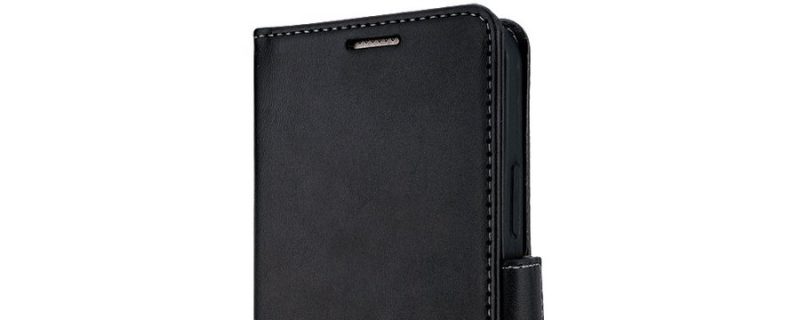
Shield where it matters: a precise layer between body and phone that pushes energy away from you.
-
No plates, no magnets, no metal loops—ever. Nothing that detunes antennas or invites power spikes.
-
Shielded speaker aperture: preserves audio while keeping the front cover continuous for shielding.
-
Ultra-thin build: thick cases and stacked cards can degrade antenna performance. Thin = calmer radio.
-
Antenna-clear zones: let the phone talk quietly.
-
Ohmmeter-checkable shielding: verify conductivity yourself.
-
Sensible extras: one RFID slot (not a brick), landscape stand (adds distance), one-finger side latch (keeps hands away from hot zones).
Promise: You’ll never see metal loops or detachable magnet plates in an RF Safe Approved design. Not now. Not ever.
4) How to use it (because behavior matters)
-
Calls: start/answer → close the front flap toward your head. Prefer speaker or a wired headset.
-
Pocket: carry with the shielded cover toward your body (back pocket often best).
-
Text/scroll: fold the flap behind the phone to shield hands/torso and keep a little distance.
-
Nightstand: don’t cuddle the phone; use airplane mode when you can, or park it farther away.
A genuine case is for the moments when the phone must be close. Distance still beats everything.
5) Why this case exists at all: the mission over the market
RF Safe didn’t appear to “move units.” We appeared to move standards—and we’ve been doing it for more than 25 years:
-
1990s: first anti-radiation phone cases (Nokia 5160/6160, StarTAC), Interferometric Array Antenna work that helped upend isotropic assumptions, early belly bands, and air-tube headsets reviewed by The Wall Street Journal.
-
2000s–2010s: we published prior art so basic safety ideas couldn’t be locked up. We even left categories (air-tubes, belly bands) when the market could do them right.
-
Today: we’re still making cases because too many designs break first principles and can be worse than no case at all. QuantaCase™ is the reference design we want copied correctly.
6) The bigger picture: from RF to light
If you truly want “99%,” you have to change the medium. That’s Li-Fi.
-
Our patented system (US11700058B2) uses Far-UVC light for zero-SAR, data-carrying indoor communications—doubling as a germicidal environment.
-
This isn’t pie-in-the-sky; it’s the endgame that removes the source instead of wrestling with it at the edge.
What slows progress? Dollars diverted to gimmick cases and influencer hype instead of real research and deployment.
7) Policy matters (because parents deserve a say)
-
Section 704 of the 1996 Telecom Act ties local hands from even raising health concerns about towers. Repeal it.
-
Push for Li-Fi compatibility in devices and Li-Fi in schools so the safe default becomes the easy default.
-
Keep HHS and regulators focused on modern science, not 1990s assumptions.
8) Your next steps (choose change, not theater)
-
Ditch the “99%” case. If it uses metal loops, magnet plates, big speaker holes, or a 360° foil—goodbye.
-
Get a QuantaCase™ and learn how to use it right.
👉 rfsafe.com/phones/EMF_Blocking_Cell_Phone_Cases.html -
Play “Bad Case Busters.” In five minutes you’ll be able to spot junk a mile away.
-
Explore the RF Safe Research Viewer and get literate on the science.
-
Back Li-Fi and policy reform so kids aren’t growing up in a world where parents can’t even raise a hand.
If you’re not helping, you’re hurting. Be RF Safe to be sure.
FAQ (fast answers you can share)
“Why not wrap the whole phone in shielding?”
Because choking the antenna forces transmit power up. Protect the person, not by attacking the radio.
“What’s the deal with speaker holes?”
Shorter 5G wavelengths slip through large apertures—and those holes often align with the ear canal. We use a shielded speaker aperture to keep audio and protection.
“Can I verify the shield?”
Yes. Ohmmeter access lets you confirm a conductive path through the shield layer.
“Isn’t ‘distance’ the real answer?”
Exactly. The case is for the moments when you can’t create distance. Use both.
The QuantaCase™ standard (one-screen checklist)
-
✅ Shield between body & phone
-
✅ No metal loops, plates, magnets
-
✅ Shielded speaker aperture (no RF window)
-
✅ Ultra-thin (don’t detune the antenna)
-
✅ Antenna-clear layout (let the radio talk quietly)
-
✅ Ohmmeter-checkable shielding
-
✅ Clear usage guidance (calls, pocket, nightstand)
When every “anti-radiation” case on the shelf meets this standard, we’ll happily leave the category—mission accomplished. Until then, this isn’t just a phone case. It’s the case for truth.