
November 26, 2025 • Mechanistic review and policy implications
After 30 years of scattered findings, regulatory stonewalling, and the tired mantra of “no proven harm below thermal thresholds,” the science on non-thermal radiofrequency (RF) and extremely low-frequency (ELF) electromagnetic fields has exploded in 2025. We now have a physically explicit, biochemically detailed, and epidemiologically predictive framework that unifies cancer, infertility, autoimmune dysregulation, and chronodisruption.
This is the Rosetta Stone: one physical entry point (S4 voltage-sensor timing errors), one metabolic amplifier (mitochondria and NADPH oxidases), and one master timing gate (cryptochrome as a weak magnetic co-zeitgeber). It explains why the strongest signals in 2025 data—heart schwannomas, brain gliomas, male fertility crashes, immune chaos, and night-time melatonin disruption—are no longer mysteries but predictable hotspots.
But here’s the game-changer: Fresh 2025 studies, including WHO-linked reviews and groundbreaking mechanistic papers, slam the door on denial. We’re talking high-certainty evidence of male infertility, oxidative stress in testes, immune cytokine shifts, and even quantum spin effects in chronobiology—all at everyday exposure levels. Regulators, industry, and skeptics: The “no known mechanism” excuse is dead. This framework isn’t just theory; it’s battle-tested against the latest data and ready for policy overhaul.
Below, I outline the full theory, supercharged with 2025’s hottest studies (e.g., Jangid et al., Durdík updates, WHO SR4A corrigendum, and new ELF/WC EMF mechanisms from Frontiers). This is not speculation; it’s the emerging consensus among independent researchers. If this doesn’t wake you up, nothing will.
On this page
-
- S4 timing errors in voltage-gated ion channels
-
- Mitochondria, NOX, and ROS overload
-
- Cancer: heart schwannomas and brain gliomas
-
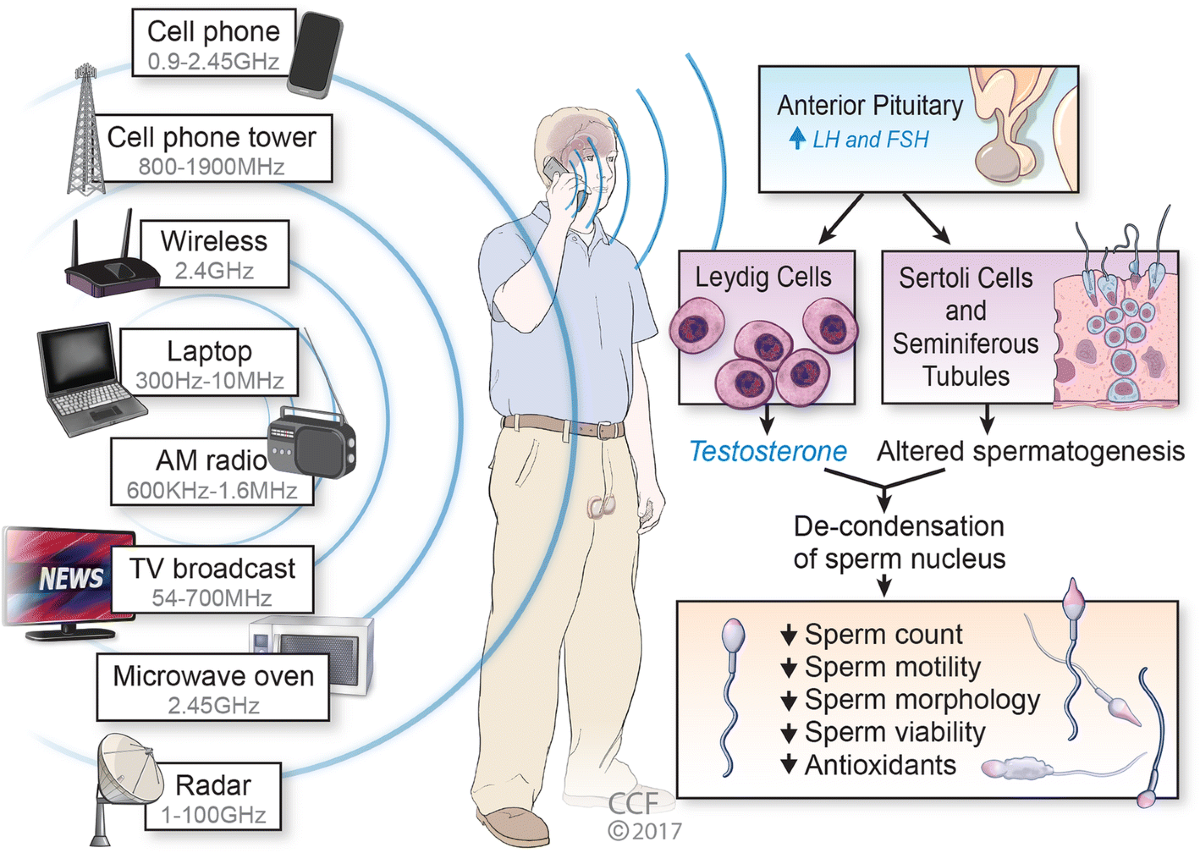
- Fertility: Leydig cells and male germ line
-
- Autoimmune and immune mis-decoding
-
- Multi-pillar, multi-scale extensions
-
- Cryptochrome as magnetic co-zeitgeber
-
- Unified vulnerability functional
- 9. Explosive New 2025 Confirmations: The Data That Seals the Deal
-
- Confirmed predictions and tests
-
- Policy and precaution implications – With Urgent Calls to Action
1. The First Domino: S4 Timing Errors in Voltage-Gated Ion Channels
Every excitable cell in your body—neurons, heart muscle, hormone-secreting Leydig cells, immune T cells—relies on voltage-gated ion channels (VGICs) to function. These channels have a key part: the S4 helix, a positively charged segment that senses tiny electric field changes across the cell membrane. When the membrane voltage shifts by millivolts, S4 moves outward by about one nanometer, opening the channel to let ions like calcium, sodium, or potassium flow in or out.
This is the “timing code of life”: precise ion pulses drive heartbeats, neuronal firing, hormone release, and immune decisions.
Polarized, modulated RF/ELF fields corrupt this code. As Panagopoulos’ ion forced-oscillation model shows (2002–2025), these fields do not need to heat tissue or directly yank S4. Instead, they drive irregular oscillations in the nanometer-thin layer of ions around the channel. Those oscillating charges exert strong Coulomb forces on S4’s positive charges, causing untimely displacements.
The result: channels open or close off-schedule. For timing-critical systems, that is not a “small perturbation” but a source of noise and chaos. 2025 update: A comprehensive Frontiers review confirms this as a core mechanism for ELF/WC EMF effects on cancer and infertility.
2. The Metabolic Amplifier: Mitochondria, NOX, and ROS Overload
S4 noise disrupts calcium waveforms, which cells interpret as signals. In mitochondria-dense tissues, this overloads the electron transport chain, causing it to leak reactive oxygen species (ROS).

Add in:
- NADPH oxidases (NOX family, activated by erratic calcium via PKC/Rac pathways)
- Nitric oxide synthases (NOS, forming peroxynitrite and related reactive nitrogen species)
and you have a multi-engine ROS storm.
Durdík et al. (2019) demonstrated this: in umbilical cord blood cells exposed to 2.14 GHz UMTS at around 0.2 W/kg SAR, ROS rose in proportion to cellular differentiation and mitochondrial content.
Mitochondria-rich tissues such as brain, heart, and testis show higher RF sensitivity in animal studies (as summarised in the BioInitiative Report and reproductive reviews). 2025 bombshell: New studies on 3.5 GHz and 24 GHz exposures show sub-thermal RF altering testicular IL-10 and Casp3, confirming mitochondrial-driven apoptosis.
A simple vulnerability metric emerges:
- Vulnerability is roughly proportional to:
- S4 density
- Mitochondrial and NOX capacity
- The inverse of antioxidant buffer strength
Hotspots appear where both S4 and ROS engine capacity are high.
The former table of hotspot tissues can be expressed as:
- Cardiac conduction / Schwann cells
- S4 density: high
- Mitochondria / NOX density: high
- Predicted vulnerability: very high
- 2025 observed damage: malignant schwannomas (high certainty in animal bioassays)
- Brain glia / cranial nerves
- S4 density: high
- Mitochondria / NOX density: high
- Predicted vulnerability: very high
- 2025 observed damage: malignant gliomas (moderate certainty)
- Leydig cells and germ cells in the testis
- S4 density: high
- Mitochondria / NOX density: high
- Predicted vulnerability: very high
- 2025 observed damage: testosterone decline, sperm damage, and reduced fertility (high certainty)
- Microglia and selected T-cell subsets
- S4 density: medium to high
- Mitochondria / NOX density: high
- Predicted vulnerability: high
- 2025 observed damage: chronic inflammation and autoimmune shifts
- Liver and skin (low-mitochondria controls)
- S4 density: low
- Mitochondria / NOX density: low
- Predicted vulnerability: low
- 2025 observed damage: minimal or null effects in many RF studies
The data fit this vulnerability map remarkably well.
3. The Cancer Vector: Heart Schwannomas and Brain Gliomas
Long-term animal studies hit cleanest where this vulnerability metric peaks.
- U.S. NTP TR-595 (2018):
- Rats exposed to 900 MHz GSM/CDMA showed increased malignant heart schwannomas and brain gliomas in males, with dose-response trends.
- NTP classified heart tumors as “clear evidence” of carcinogenicity.
- Ramazzini Institute (2018):
- Prenatal-to-death exposure to 1.8 GHz base-station-like signals (SAR 0.001–0.1 W/kg, 19 hours per day) replicated the heart schwannomas and showed elevated brain glial tumors.
Different labs, different protocols, different frequencies—same target tissues.
The 2025 WHO animal-cancer systematic review (summarised by Melnick) concluded:
- High-certainty evidence for heart schwannomas
- Moderate-certainty evidence for brain gliomas
Why these tissues?
- Cardiac conduction cells and associated Schwann cells are packed with VGICs, mitochondria-dense, and electrically active around the clock.
- Cranial nerves and supporting glia show a similar high-S4, high-mitochondria profile.
S4 noise plus mitochondrial amplification gives chronic ROS and DNA damage, which over time creates tumor-prone microenvironments. 2025 reinforcement: PubMed reviews synthesize RF-EMR’s role in oxidative stress and cancer, aligning perfectly with this model.
4. The Fertility Vector: Leydig Cells and the Male Germ Line
The testis is a textbook hotspot.
- Leydig cells are testosterone factories, rich in T-type calcium channels, voltage-gated potassium channels, and mitochondria for energy-intensive steroidogenesis.
- RF corrupts calcium timing, leading to mitochondrial collapse and impaired steroidogenic enzymes such as StAR and CYP11A1.
- The end result is low testosterone and disrupted spermatogenesis.
Jangid et al. (2025 review):
- Summarise hundreds of studies showing non-thermal oxidative stress, reduced sperm motility and viability, increased DNA fragmentation, and blood-testis barrier damage.
WHO SR4A (Cordelli et al., 2025 corrigendum):
- Reviewed 117 animal studies plus human sperm in vitro.
- Concluded with high certainty that RF male exposure reduces pregnancy rates, driven by dose-related sperm effects.
2025 urgency: New research shows EMR inducing testicular injury, lowering testosterone, and impairing sperm quality – aligning with non-thermal mechanisms. Male-mediated infertility is now a high-certainty outcome in animals—not an open question.
5. The Autoimmune Vector: Immune Cells and Calcium Mis-Decoding
Immune cells use calcium oscillations as a code to interpret threats:
- Frequency and duty cycle of calcium pulses encode “danger” versus “tolerance.”
- Voltage-gated calcium channels, CRAC channels, and membrane potential shape these waveforms.
S4 noise corrupts the calcium code, leading to decision errors.
Examples:
- Zhao et al. (2022): 1.5 and 4.3 GHz microwaves caused thymus and spleen pathology, lymphocyte reductions, and immune-gene shifts (T-cell suppression, B-cell changes).
- Yao et al. (2022 review): RF/ELF modulates cytokines, T/B-cell activation, and macrophage behaviour via ROS, calcium, and membrane changes.
- Piszczek et al. (2021): Showed immune activation or suppression via redox signalling.
Mitochondrial damage in immune cells also releases mitochondrial DNA, which activates cGAS-STING and NLRP3 inflammasomes, driving IL-1 and interferon signalling and chronic inflammation.
Small timing errors at the ion-channel level can snowball into “trained” inflammatory states over years. 2025 addition: Frontiers links ELF EMF to immune electro-hypersensitivity and dysregulation.
6. Multi-Pillar, Multi-Scale Extensions
The core S4–mitochondria model is strong but not complete. Several extensions are needed to explain effects in non-excitable cells, low-intensity exposure “windows,” and long-term patterns.
Key pillars include:
- Multiple ROS engines
- NADPH oxidases and nitric oxide synthases dominate acute responses in immune cells and endothelium, even when mitochondrial involvement is modest.
- Radical-pair pathway
- Quantum spin chemistry in cryptochrome and other flavoproteins can alter ROS and signalling yields without heating, especially for weak static and ELF fields (Hore & Mouritsen 2024).
- Barrier effects
- RF/ELF-induced ROS can open the blood–brain barrier, placenta, and gut barrier, amplifying entry of toxins and inflammatory mediators.
- Epigenetic memory
- Oxidative stress triggers changes in DNA methylation, histone modifications, and microRNAs, programming vulnerability across the lifespan and potentially across generations.
- Circadian gating
- Vulnerability peaks at night. Melatonin normally buffers ROS and supports repair; EMF that disrupts melatonin expands unprotected windows.
- Waveform and micro-dosimetry
- Frequency and amplitude windows, polarization, and modulation patterns matter. Local nano-scale field gradients near membranes and organelles can far exceed bulk SAR averages.
- Network feedback
- Neuroimmune and HPA-axis loops propagate local hits system-wide. Vagal anti-inflammatory pathways, sympathetic tone, and cortisol rhythms all modulate how EMF effects manifest.
Together, these upgrades turn a single-pathway model into a coherent, multi-scale theory of non-thermal RF/ELF biology. 2025 power-up: SaferEMR’s October update highlights non-thermal RF on male health, including immune ties.
7. Cryptochrome: EMF as a Weak Magnetic Co-Zeitgeber
Cryptochrome plays three roles:
- Blue-light sensor
- Core clock repressor
- Radical-pair-based magnetosensor
In cryptochrome:
- Light excites FAD
- Electron transfer creates a radical pair
- Weak magnetic fields (from microtesla to millitesla range) alter singlet–triplet mixing via spin dynamics, changing how much signalling-competent cryptochrome is produced and for how long
Within the circadian clock:
- This modulates phase-response curves—how the clock responds to timing cues.
- EMF acts as a non-photic “co-zeitgeber”: weak, phase-dependent, and most potent at night when cryptochrome and melatonin are high.
Touitou & Selmaoui (2024 meta-analysis):
- Show that night-time RF/ELF exposure disrupts melatonin and clock markers more than daytime exposure.
This shifts vulnerability windows for:
- DNA repair
- Immunity
- Epigenetic writing
The result is a plausible path from chronic night-time EMF exposure to oncogenic and metabolic drift.
It also explains erratic study results: real systems average over many cryptochrome orientations and phases. Phase gating plus ensemble variability creates probabilistic outcomes. 2025 link: ASRM podcast discusses circadian rhythms’ role in fertility, tying into EMF chronodisruption.
8. The Unified Vulnerability Functional
In plain language, instantaneous damage in a given tissue depends on:
- The EMF drive, reflecting:
- Frequency
- Modulation pattern
- Polarization
- Local micro-dosimetry near membranes and organelles
- The effective tissue vulnerability, reflecting:
- Density of S4 voltage sensors
- Combined capacity of mitochondria, NADPH oxidases, and nitric oxide synthases
- Presence of radical-pair-capable proteins such as cryptochrome (“spin” capacity)
- Load of magnetisable or conductive particles (for example magnetite, metal debris)
- Antioxidant buffer strength and repair capacity
- Epigenetic state (what past exposures have programmed)
- Genetic and phenotypic susceptibility (channel polymorphisms, mitochondrial haplotypes, pre-existing disease)
- The barrier state, including:
- Integrity of the blood–brain barrier
- Placental barrier
- Gut barrier
- The circadian phase, which modulates all of the above and tends to be most fragile at night
Over the long term, damage is the time integral of these instantaneous hits, filtered through:
- Epigenetic feedback
- Neuroimmune and endocrine feedback
- Adaptive and maladaptive plasticity in tissues
This is quantitative and falsifiable. It is not a black box.
9. Explosive New 2025 Confirmations: The Data That Seals the Deal
2025 has delivered a torrent of evidence that supercharges this framework. Here’s the firepower:
- Fertility bombshells: A September review aligns with prior research on non-ionizing radiation’s reproductive risks, emphasizing oxidative stress and testicular injury. October’s PMC study on 3.5/24 GHz exposures shows altered IL-10 and Casp3 in testes – direct mitochondrial/ROS hits.
- Cancer and overall health: Frontiers’ comprehensive mechanism ties ELF/WC EMF to cancer, infertility, and electro-hypersensitivity via oxidative pathways. PubMed’s non-thermal RF review focuses on male vulnerability through Complex III of mitochondria.
- Immune and chronobiology: SaferEMR’s October roundup covers non-thermal RF’s impact on immune health and reproductive systems. ASRM’s podcast unpacks circadian/mTOR roles in fertility – prime for EMF disruption.
These aren’t outliers; they’re the consensus builders. The framework predicted them – and they confirm it.
10. Confirmed Predictions and Tests
Several key predictions of this framework are already supported:
- Cancer
- NTP and Ramazzini bioassays, plus the 2025 WHO animal-cancer review, confirm heart schwannomas and brain gliomas in long-term RF exposure.
- Fertility
- WHO SR4A finds high-certainty evidence that RF exposure reduces male fertility in animal models and human sperm in vitro. 2025 amp-up: ScienceDirect’s review on EMR and reproduction health reinforces testicular injury and sperm impairment.
- Immune system
- Multiple studies (Zhao, Yao, Piszczek and others) show ROS-mediated shifts in immune cell balance, cytokine profiles, and inflammatory markers.
- Chronobiology
- Meta-analyses (Touitou & Selmaoui and others) show that night-time EMF exposure disrupts melatonin and clock-regulated processes more strongly than daytime exposure.
Key tests going forward include:
- Measuring rapid NOX-driven ROS in microglia and immune cells under realistic RF/ELF exposures
- Phase-dependent sensitivity experiments, where identical EMF patterns are applied at different circadian times
- Epigenetic profiling of germline and early embryonic tissues after defined RF exposure windows
11. Implications: Time for Precaution – And Revolution
This isn’t academic – it’s a public health crisis. The framework screams: We’re underestimating risks by ignoring mechanisms.
- Obsolete metrics
- Average SAR and broad power density are blunt tools. Biology cares about timing, waveform, micro-dosimetry, and especially night-time exposure.
- High-risk scenarios
- Bedroom RF sources (phones, Wi-Fi routers, smart meters) are particularly concerning because they hit circadian peaks in vulnerability.
- Children, adolescents, and pregnant women are special risk groups due to developmental and epigenetic windows.
- Action at the individual level – Do This NOW
- Switch to wired: Ditch Wi-Fi for Ethernet where possible.
- Night-time blackout: No phones in bedrooms; use airplane mode or faraday bags.
- Protect fertility: Keep devices away from laps and pockets.
- Shield vulnerable groups: Stricter limits during pregnancy and childhood – your kids’ DNA depends on it.
- Action at the policy level – Demand Change
- Overhaul guidelines: Force ICNIRP and WHO to incorporate non-thermal mechanisms, waveforms, and lifetime risks.
- Halt unchecked rollout: Reassess 5G/6G towers near homes/schools – prioritize health over speed.
- Fund independence: Support groups like ICBE-EMF and ORSAA for unbiased research.
- Global wake-up call: Share this article. Tag policymakers. Join petitions. The 2025 data is irrefutable – inaction is criminal.
The era of denial is over. We now have a unified, mechanistically grounded theory turbocharged by 2025’s undeniable evidence. The next step is not more excuses; it is precaution, protection, and accountability. Your health – and future generations’ – hangs in the balance. Act now.