
The shield has to face the user
If the shielded side is not between you and the phone, the case is not being used the way it was designed to work.
A directional anti-radiation phone case only helps the way it is supposed to help when it is used correctly. That means the user has to understand which side is shielded, when the front flap needs to be closed, how the case should face the body in a pocket or bag, and why distance is still one of the most important habits in the whole conversation.
This static TruthCase™ / QuantaCase® usage guide keeps the same core guidance as the live PHP page, but turns it into a cleaner long-form resource that is easier to read, easier to share, and easier for search engines to understand. It is built to teach real use: speakerphone, hold-to-ear calls, pocket carry, bag carry, in-car placement, and the everyday lower-exposure habits that make the case logic easier to follow.
One of the biggest problems in this category is that buyers assume the case does all the work by itself. A folio-style directional case is not magic. It is a design that only makes sense when the user understands how to place the barrier between the body and the handset during the moments that matter most.
If the shielded side is not between you and the phone, the case is not being used the way it was designed to work.
Speakerphone, bag carry, and keeping the phone away from the body whenever practical remain some of the strongest everyday habits available.
A better product teaches the user what to do during calls, in pockets, in bags, and around the home or car, instead of hiding behind generic shielding language.
The most honest anti-radiation case is not the one with the loudest promise. It is the one that teaches the user how to put the barrier in the right place, at the right time, in the real world.
These ten steps follow the same core flow as the live guide, but are presented here as a static long-form page so users can skim, share, and return to exactly the section they need.
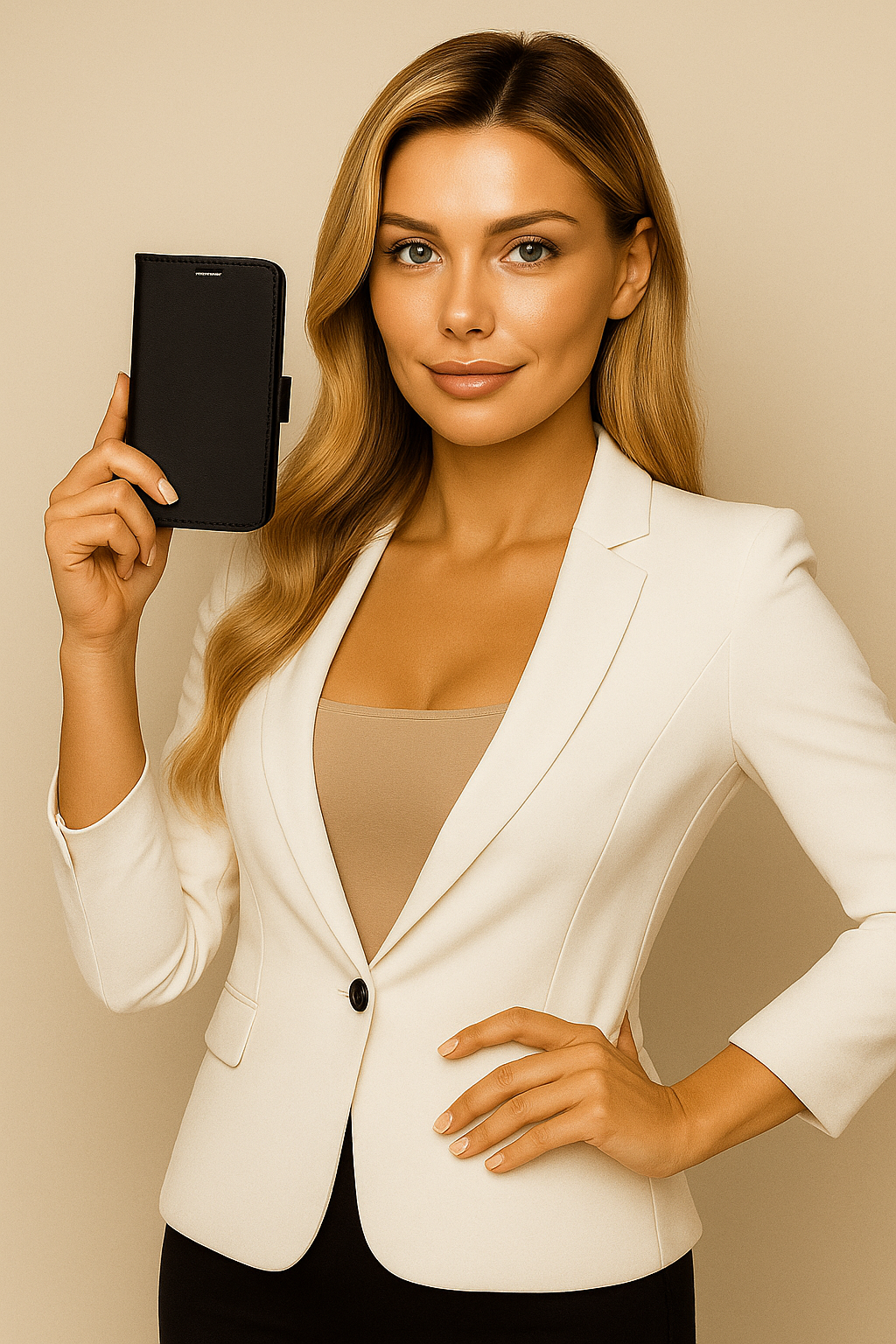
The visual overview for the whole guide: this is the starting frame for how RF Safe wants the product and its habits to be understood.
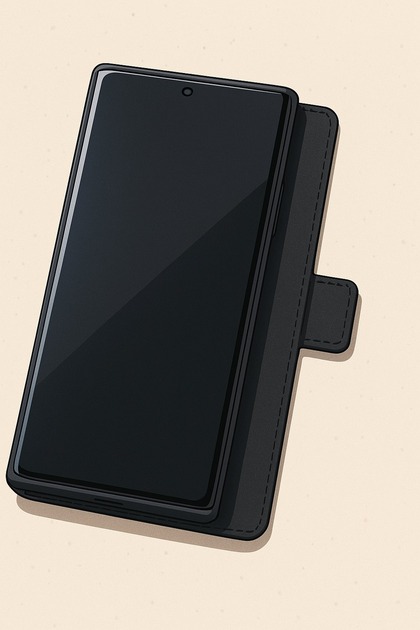
Flip the front cover behind the phone to create a grip lip and keep the handset away from the body while speaking hands-free.
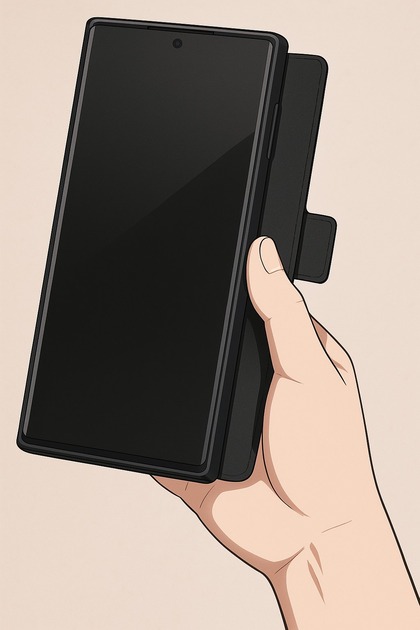
Use the lip for a stable thumb position so you do not need to wrap the hand tightly around the phone’s sides.
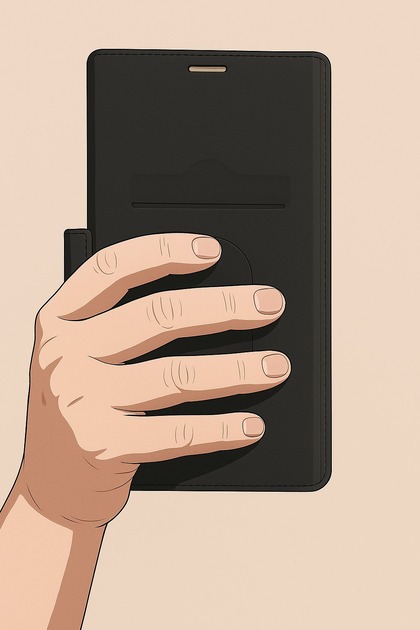
From the back view, your fingers support the phone behind the shielded flap instead of gripping the sidewalls directly.
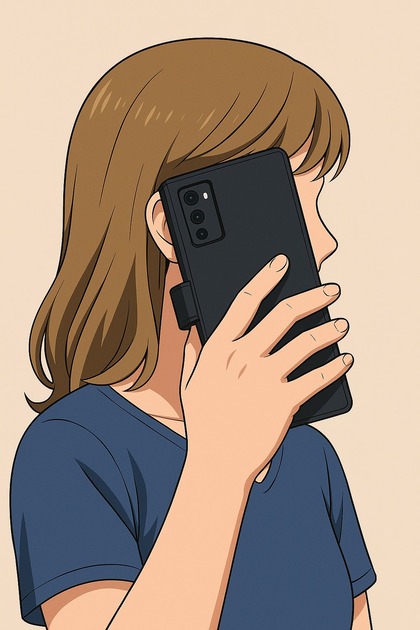
If you must place the phone to your head, the front cover should be closed so the shielded side sits between your head and the device.
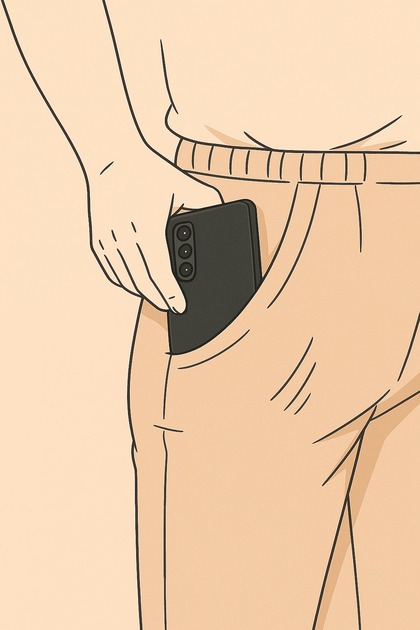
Pocket carry is not ideal, but if unavoidable, the shielded cover should face the body and the phone should come out of the pocket again as soon as practical.
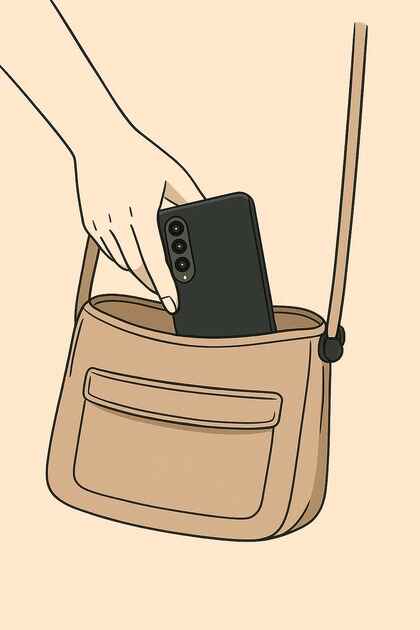
Bag carry is the better carry habit. The shielded front cover should still face toward the user for the barrier to remain on the body side.
.png)
Mount the phone on the dashboard with the rear of the handset facing outward so the main RF-emitting surface points away from passengers instead of deeper into the cabin.
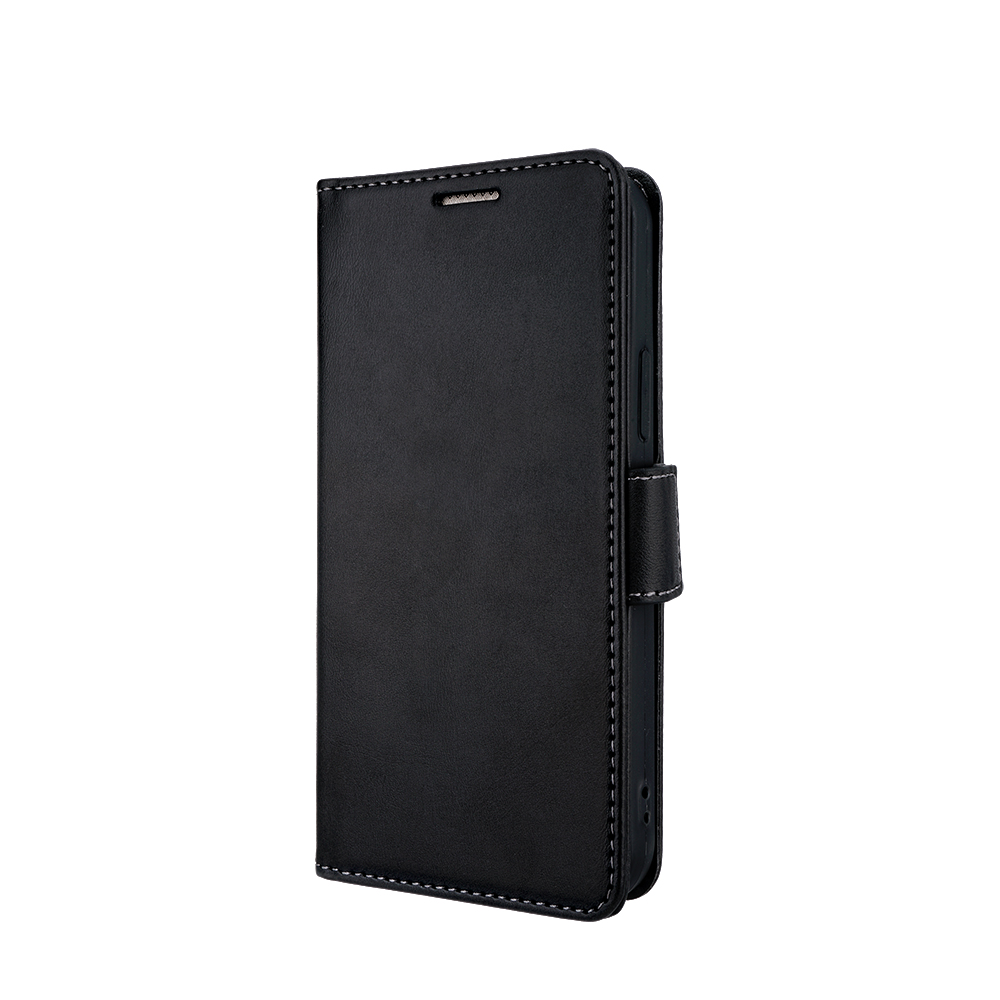
The physics-first step: ultra-thin, antenna-aware, directional, and intentionally free of metal loops, magnets, and steel plates.
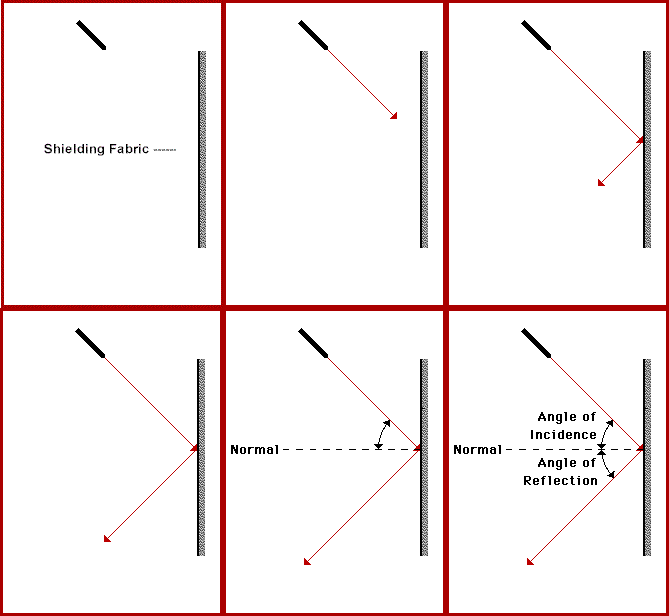
The guide ends by explaining why shielding fabric behaves more like a very thin conductive surface than ordinary cloth.
These sections expand the same ideas in more readable long-form language, so the page can work as an actual resource instead of only a fullscreen slide deck.
This opening frame exists to set the tone for the whole guide. RF Safe’s usage philosophy is not “buy the case and forget the rest.” It is “use the case correctly, understand which side is shielded, and combine that hardware with habits that create more distance and less unnecessary transmission.”
This is what makes the guide different from ordinary case packaging. It treats the product as part hardware, part training tool.
In the live guide, the front cover is flipped behind the phone, creating a small lip that makes speakerphone use more comfortable. The idea is practical: you can hold the phone without laying it flat in the palm, which reduces hand contact and makes it easier to keep the handset farther from the body while you speak.
Speakerphone use is one of the strongest habits in the whole guide because it works with the biggest exposure-reduction principle available to ordinary users: distance.
This view shows how the thumb can rest against the extended lip rather than forcing a tight wrap around the phone’s edges. That matters because the case is not only trying to block on one side; it is also trying to encourage a grip that makes a little more space between the user and the device.
It is a small ergonomic choice, but small ergonomic choices are what turn “good theory” into something people will actually use correctly during normal life.
From behind, the guide makes the same point in a second way: the fingers support the phone behind the flap rather than gripping the sidewalls directly. This is part comfort and part usage education. The user is being shown a more intentional way to interact with the phone instead of defaulting to the tight full-hand grip most people use unconsciously.
If a private call requires the phone to go directly to the head, RF Safe’s instruction is explicit: the front shielding cover should be closed over the front of the phone so the barrier sits between your head and the device. The guide also says to turn off unnecessary transmitters such as Bluetooth and Wi‑Fi before making that call.
The deeper point is that holding the phone to your ear should be treated as the less-preferred option. Speakerphone or a headset remains the better choice whenever the moment allows it.
The live guide is unusually clear here: RF Safe does not recommend regular pocket carry. But if the situation is unavoidable, the shielded cover should be closed over the screen and placed between your body and the phone, with the camera lenses facing outward. The guide also tells users to disable Bluetooth and Wi‑Fi before doing this.
Just as important, the guide says to get the phone back out of the pocket as soon as practical and return to a distance-first routine. Pocket carry is presented as a fallback, not a best practice.
Bag or purse carry is one of the strongest recommendations in the guide. RF Safe’s instruction is to place the case so the shielded front cover still faces toward you, preserving the barrier on the user side while also gaining more distance than a pocket would allow.
The guide explicitly says this is preferable to pocket carry and extends the same idea to men using a briefcase or other bag. Again, the recommendation is paired with a simple habit: turn off radios you do not need before stowing the phone.
The in-car step is about placement and orientation inside a reflective cabin. RF Safe’s guidance is to use a dashboard phone holder that props the smartphone with its rear facing the windshield. The idea is to direct the phone’s main RF-emitting surface outward instead of letting it point deeper into the passenger area.
The linked in-car article also argues that enclosed, metal-lined spaces such as cars, buses, and RVs can behave like reflective cavities, which is why in-car placement deserves more thought than simply dropping the phone on the seat or clipping it near the body. That is the logic behind the dash-first recommendation.
This is the concept step in the guide. QuantaCase™ is presented as an ultra-thin, antenna-aware folio that uses directional shielding between you and the phone. It is intentionally free of metal loops, magnets, and steel plates, and it uses a shielded speaker opening as part of the same logic.
The point of this step is to tie daily use back to design. The way the case is supposed to be used matches the way the case was built: for calls, close the shielded cover toward your head; for carry, place the shielded cover toward your body; and whenever possible, reduce unnecessary radio use and create more distance.
The live guide closes by explaining the shielding material itself in simpler physical terms: the “99%” fabric behaves more like a very thin conductive surface than ordinary cloth. When RF hits that conductive weave, currents are induced in the metalized threads, creating an opposing field that reflects or attenuates energy on the protected side.
The point of including this step at the end is to keep expectations honest. The material is not magic fabric. It is a conductive layer. And just like every other part of the case story, its usefulness depends on where it is placed and how the finished case is actually used.
The purpose of a usage guide is not just to tell the user how to open or close a flap. It is to show how the case fits into a larger set of lower-exposure habits that make more sense than relying on a product alone.
A directional case is most useful when it is paired with habits that keep the handset farther from the head whenever possible.
If you can keep the phone out of the pocket and away from the body, that is usually a better everyday habit than relying on close carry.
Desk placement, nightstand placement, in-car placement, and storage habits all affect how often the phone sits close to the body.
If a feature is not needed in the moment, reducing unnecessary wireless activity can be part of a more intentional low-exposure routine.
The strongest phone-radiation habit is still distance. A better case helps, but a better case plus better daily behavior helps more.
This usage guide works best when it leads into the larger RF Safe ecosystem: the TruthCase page, the red-flags page, the buyer’s guide, the EMF phone case page, and the proof archive.
The main product and philosophy page that explains the truth-first, first-principles approach behind the case.
The buyer-awareness page that teaches users how to spot misleading anti-radiation case claims and poor design choices.
The broader guide for readers who are still shopping like ordinary case buyers and need to understand why design matters.
The direct landing page for visitors who already know they want an EMF phone case and want the clean product argument.
The explanatory page for readers who want the shielding concept and correct-use logic before the purchase decision.
The comparison archive of videos, meter demonstrations, and real-world tests for proof-oriented readers.
Open the selector and jump straight to the matching TruthCase™ / QuantaCase® page.
This section keeps the practical user questions front and center.
The core rule is simple: keep the shielded side between your body and the phone when it matters. That means closing the front flap toward your head during calls and facing the shielded side toward your body during carry.
Yes. RF Safe’s usage logic treats speakerphone and distance as stronger habits than direct head contact whenever practical.
Bag carry is the preferred habit. If pocket carry is unavoidable, the shielded cover should face the body and the phone should come back out as soon as practical.
Go next to the TruthCase page, the red-flags guide, the buyer’s guide, the EMF phone case page, and the anti-radiation test archive.
This static page is built from the current live usage-guide sequence and image set, then reorganized into a more readable long-form structure.
Choose your phone and jump straight to the matching case page.
If the embedded selector does not load, use the full selector page.