What this page argues
Thermal-only limits may prevent gross tissue heating, but they are not designed to serve as the whole biological safety model for chronic, pulsed, modulated, body-proximate exposure.
This page is not built around a slogan. It is built around a narrower, more defensible claim: once repeated biological interaction is documented below the heating threshold, thermal-only guidelines stop being a complete safety standard. That does not require pretending every disease endpoint has already been proven in every human population. It requires admitting that the governing safety model is incomplete.
RF Safe’s case rests on three pillars under one roof: a 6,352-paper research library, open SAR comparison tools, and physics-first mitigation tools like TruthCase™ / QuantaCase®. Together they support a unified S4–Mito–Spin framework for making sense of non-thermal RF findings across mechanism, pathology, fertility, development, blood rheology, and policy.
Thermal-only limits may prevent gross tissue heating, but they are not designed to serve as the whole biological safety model for chronic, pulsed, modulated, body-proximate exposure.
It does not collapse every health endpoint into a single courtroom-style causation claim. It argues the standards are incomplete once below-threshold biological interaction is repeatedly documented.
The central fact is not that every downstream disease has already been proven in every human population. The central fact is that the safety model still enforced in the United States treats RF injury as a heating problem, while the scientific record now contains repeated evidence of biological interaction below the heating threshold. Once that is true, a heat-only standard is not a complete safety standard.
Agencies can continue to enforce older standards long after the literature has widened beyond those assumptions. That is why this page separates the scientific body of evidence from the regulatory story built around it.
If a field changes biology below the heating threshold—whether the observed endpoint looks harmful, mixed, or adaptive-looking—that is evidence of interaction. The policy question becomes whether existing limits were designed to protect against that category of interaction. They were not.
RF Safe’s argument is disciplined: thermal-only guidelines do not fail because every question has been answered. They fail because the one question that matters most has already been answered often enough—RF exposure can interact with living systems below the heating threshold.
RF Safe’s current paper-stats page is useful precisely because it is imperfect: it shows scale, pattern, and direction, while also warning readers that AI-assisted classifications are only a navigation aid. That makes it better suited to an “evidence map” argument than a fake certainty argument.
Review the featured study set, the paper-stats dashboard, or the open SAR tools before you ever get to product claims.
Prefer to start with everyday habits, biology, the numbers, or policy? These four paths make the ecosystem easier to navigate and make this page more useful than a dead-end opinion piece.
Learn what TruthCase really is, how to use it correctly, what red flags to avoid, and how to find your phone model.
See the framework explainer, the proof page, and the ion/ROS visualizations that turn scattered non-thermal results into a single map.
Use open tools to compare head and body SAR values and keep the measurement story visible, even while arguing that SAR alone is not enough.
Use the action hub, Section 704 page, HHS / Public Law 90-602 page, FCC remand page, and Light-Age roadmap to turn concern into policy.
The strongest case here is not a single paper. It is the convergence of mechanistic, animal, fertility, child-vulnerability, legal, and policy evidence on the same core point: biological activity below thermal thresholds is a real part of the record.
RF Safe’s paper-stats page currently lists 6,352 papers. In the latest extraction, 1,411 are tagged harm, 1,873 mixed, 599 benefit, 623 no effect, 1,545 unclear, and 301 unknown/no extraction. That means the “no effect” bucket is 9.8% of total papers on the current stats page. RF Safe’s own automated note says harm/mixed classifications outnumber no effect and that a precautionary approach is reasonable, while original studies should still be checked directly.
That framing matters because “benefit” is not biological silence and “mixed” is not biological silence either. Once interaction is repeatedly documented below the heating threshold, the policy question is no longer whether the field is perfectly inert. The policy question is whether the standard was built to protect against that category of interaction. A heat-only standard was not.
NCI, CDC, and older WHO/FDA public pages still emphasize that causation in humans has not been established or that large epidemiologic reviews do not show a clear increase in several brain-tumor endpoints. A 2024 systematic review likewise reported moderate-certainty evidence that mobile-phone use likely does not increase the risk of glioma, meningioma, acoustic neuroma, pituitary tumors, salivary-gland tumors, or pediatric brain tumors in the datasets analyzed.
This page does not pretend those positions do not exist. It argues something narrower and harder to dismiss: even if one epidemiologic branch is reassuring on some endpoints, that does not erase the animal-cancer, fertility, child-dosimetry, oxidative-stress, mechanistic, and legal records. Regulatory reassurance and scientific adequacy are not the same thing.
S4 points to voltage-sensor timing and ion-channel fidelity. Mito points to mitochondria, NADPH oxidases, and redox amplification. Spin points to radical-pair and spin-sensitive chemistry in heme and flavin systems. Together, the framework argues that weak, polarized, modulated fields can introduce timing noise into voltage-gated systems, drive ROS and oxidative stress in mitochondria-rich tissues, and alter redox chemistry even in places where the classic heat story is irrelevant.
Panagopoulos’ 2025 mechanism review explicitly ties IFO/VGIC disturbance to downstream oxidative stress. Durdík’s 2019 cord-blood work showed transient RF-induced ROS increases that rose with higher degrees of cellular differentiation. The point is not that the last word has been spoken. The point is that “there is no plausible mechanism” is no longer a credible blanket answer.
The NTP reported clear evidence of malignant heart schwannomas and some evidence of malignant gliomas in male rats exposed to GSM- and CDMA-modulated cell-phone RF. The Ramazzini Institute reported a statistically significant increase in heart schwannomas in male rats under lifetime far-field exposure. In 2025, a systematic review of 52 animal studies rated the certainty of evidence as high for increased glioma and malignant heart schwannoma in male rats. A 2024 molecular follow-up found that these rat tumors shared morphological and driver-gene similarities with low-grade human gliomas.
This matters because replicated pathology in long-term mammalian systems is a very different category of evidence than a one-off cell experiment. Even if human causation remains debated, the exposure is no longer behaving like a biologically inert one.
The 2025 corrigendum to the WHO-linked male-fertility review upgraded reduced pregnancy rate in animal mating studies to high certainty. The Yazd cohort associated longer phone-call duration during pregnancy with miscarriage and abnormal infant weight and height. Child dosimetry work reported substantially higher localized absorption in children’s brains and eyes than in adults. Even if not every endpoint is settled, the vulnerable-population story is already strong enough to matter for policy.
This is why RF Safe keeps returning to children, pregnancy, and fertility. The question is no longer only what happens to the adult user in the short run. It is what happens in the tissues and life stages where the cost of getting the standard wrong is highest.
Henry Lai and Narendra Singh reported DNA strand breaks in rat brain cells after low-intensity microwave exposure in the mid-1990s. University of Washington reporting later described internal Motorola documents discussing how to “war-game” Lai’s work and attempts to remove Lai and Singh from the project. In a separate line of evidence, Huss and colleagues found that industry-only funded controlled studies were far less likely to report statistically significant effects than studies funded by public or charitable sources.
None of that proves every individual paper is compromised. It does show that the politics of doubt and sponsorship bias belong inside any serious public explanation of why the record stayed confused for so long.
The FDA-approved TheraBionic P1 uses amplitude-modulated RF electromagnetic fields to treat advanced hepatocellular carcinoma. Its published mechanistic work points to Cav3.2 T-type voltage-gated calcium channels and calcium influx, providing a real clinical example of biologically meaningful RF interaction at non-thermal levels.
That does not mean cellphone exposures are the same as a tumor-targeted therapeutic device. It means the old rhetorical fallback—non-ionizing RF cannot do anything except heat tissue—is no longer defensible as a blanket claim.
Accessories are only a bridge. The main fight is not over gadgets. It is over whether the legal and regulatory system will continue using a partial, heat-only standard as if it were the whole truth.
The D.C. Circuit remanded the FCC’s decision to retain the 1996 RF limits because the agency failed to respond adequately to non-cancer, child-specific, long-term, technological-change, and environmental issues.
RF Safe argues it is indefensible to halt or fail to expand federal research after the NTP and related evidence raised serious carcinogenicity questions.
A 2025 policy review catalogs gaps in premarket testing, post-market oversight, environmental protection, worker protection, and child-specific policy. RF Safe reads those gaps as a governance failure, not a scientific success story.
Section 704 bars state and local governments from regulating personal wireless facilities on the basis of environmental effects of RF emissions when FCC rules are met. RF Safe treats that as a health gag built on an incomplete federal standard.
RF Safe argues HHS and the FDA already have a public-health mandate to run an electronic-product radiation control program, conduct research, and keep the public informed. The problem is not lack of law. It is lack of enforcement.
The 2021 D.C. Circuit did not simply say “go study more later.” It held that the FCC failed to provide a reasoned explanation for keeping its 1996 limits and that the agency’s reliance on conclusory FDA statements was not enough. The court also found the order arbitrary and capricious in its complete failure to respond to environmental-harm comments.
The court did not put the FDA on trial as the defendant, but it did fault the FCC’s reliance on FDA statements that lacked articulated factual bases. In January 2026, Reuters and the Wall Street Journal reported that the FDA removed older webpages stating cellphones are not dangerous while HHS launched a new cellphone-radiation study. RF Safe’s view is that stronger public-health leadership belongs with EPA/HHS-style health oversight, not with a spectrum-auction mindset alone.
RF Safe’s endgame is not disconnection. It is better design: wired infrastructure where practical, LiFi and light-based indoor networking where possible, lower unnecessary ambient RF, and standards that account for modulation, duty cycle, vulnerable tissues, and realistic child use rather than treating people like bags of water.
TruthCase™ / QuantaCase® is not presented as the solution to policy failure. It is RF Safe’s hardware answer while the standards and infrastructure catch up: a physics-first folio case designed to make better habits easier and bad design choices easier to spot.
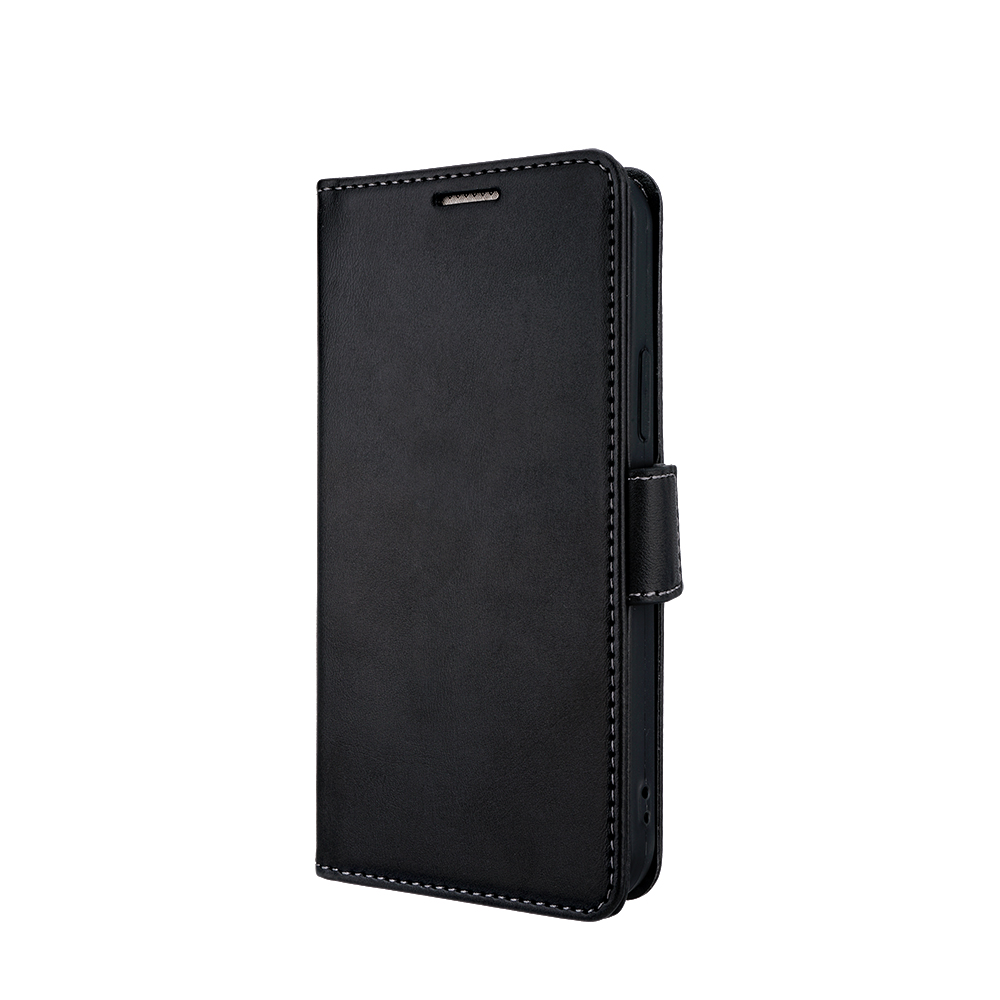
Use the selector here to jump straight to the matching model page while keeping the wider research and policy context in view.
This section is written to catch the broad search questions people actually type, while staying consistent with the narrower argument the page is making.
No. The page argues something narrower: repeated biological interaction below the heating threshold means thermal-only rules are not a complete safety standard, even if every human endpoint is not settled.
Regulatory consensus reflects what agencies still say and enforce. Scientific consensus is broader and may include mechanistic, animal, fertility, dosimetry, and policy evidence that agencies have not fully incorporated into standards.
Because the key issue is not whether the exposure only heats tissue. The literature now contains repeated reports of biological interaction below the heating threshold, and that undercuts heat-only reassurance as a complete safety theory.
It is RF Safe’s way of unifying the mechanism story: S4 for voltage-sensor timing, Mito for mitochondrial/redox amplification, and Spin for spin-sensitive chemistry in heme/flavin systems.
In 2021, the D.C. Circuit held key parts of the FCC’s decision to retain the 1996 RF limits were arbitrary and capricious because the agency failed to give a reasoned explanation on non-cancer, long-term, child-specific, technological-change, and environmental issues.
This page acknowledges those positions. It argues that reassuring epidemiology on some endpoints does not erase the separate animal, fertility, child-vulnerability, oxidative-stress, and legal records.
Because RF Safe presents accessories as a bridge. The case is not the whole solution; it is the practical hardware expression of a broader lower-exposure, truth-first design philosophy.
Start with the featured studies or paper stats, then open the S4–Mito–Spin proof pages, SAR tools, and the Action Hub. If you want a physics-first mitigation tool now, open the TruthCase pages and select your phone.
This page is strongest when readers can verify the record themselves, compare interpretations, and move between research, policy, and practical action without leaving the ecosystem.
Explore the research, compare phones, open the framework, or choose a TruthCase™ while you push for better standards.
Choose your phone and jump straight to the matching case page.
If the embedded selector does not load, use the full selector page.