Phone Network Comparison: Nokia X30 vs Samsung Galaxy A34
When it comes to phone networks, the Nokia X30 and Samsung Galaxy A34 have some similarities and differences that are worth noting. Here’s a breakdown of the specs:
| Phone network Comparison | |
|---|---|
Nokia X30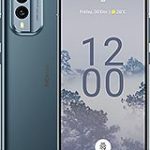 |
Samsung Galaxy A34 |
| network Speed | |
| HSPA, LTE-A (CA), 5G | HSPA, LTE-A, 5G |
| network SIM | |
| Nano-SIM and eSIM or Dual SIM (Nano-SIM, dual stand-by) IP67 dust/water resistant (up to 1m for 30 min) |
Single SIM (Nano-SIM) or Hybrid Dual SIM (Nano-SIM, dual stand-by) IP67 dust/water resistant (up to 1m for 30 min) |
| 2G Network | |
| GSM 850 / 900 / 1800 / 1900 – SIM 1 & SIM 2 (dual-SIM model only) | GSM 850 / 900 / 1800 / 1900 – SIM 1 & SIM 2 (dual-SIM model only) |
| 3G Network | |
| HSDPA 850 / 900 / 1700(AWS) / 1900 / 2100 | HSDPA 850 / 900 / 1700(AWS) / 1900 / 2100 |
| 4G Network | |
| 1, 2, 3, 4, 5, 7, 8, 12, 17, 20, 28, 32, 38, 39, 40, 41 | 1, 2, 3, 4, 5, 7, 8, 12, 17, 20, 26, 28, 32, 38, 40, 41, 66 |
| 5G Network | |
| 1, 3, 5, 7, 8, 28, 38, 40, 41, 77, 78 SA/NSA/Sub6 | 1, 3, 7, 8, 20, 28, 38, 40, 41, 77, 78 SA/NSA/Sub6 |
| Network Review | |
| Review Nokia X30 Network Review | Review Samsung Galaxy A34 Network Review |
Related for Nokia X30 |
Related for Samsung Galaxy A34 |
Network Speed:
– Nokia X30: HSPA, LTE-A (CA), 5G
– Samsung Galaxy A34: HSPA, LTE-A, 5G
Both phones support 5G connectivity, but the Nokia X30 has LTE-A (CA) which stands for Carrier Aggregation, a technology that enables faster data speeds by combining multiple frequency bands.
SIM:
– Nokia X30: Nano-SIM and eSIM or Dual SIM (Nano-SIM, dual stand-by)
– Samsung Galaxy A34: Single SIM (Nano-SIM) or Hybrid Dual SIM (Nano-SIM, dual stand-by)
The Nokia X30 offers the option to use an eSIM (an embedded SIM that doesn’t require a physical SIM card), while the Samsung Galaxy A34 has a hybrid SIM slot that can accommodate either a single SIM or a combination of SIM and microSD card.
2G Network:
– Nokia X30: GSM 850 / 900 / 1800 / 1900 – SIM 1 & SIM 2 (dual-SIM model only)
– Samsung Galaxy A34: GSM 850 / 900 / 1800 / 1900 – SIM 1 & SIM 2 (dual-SIM model only)
Both phones work on 2G networks, which are gradually being phased out in some countries.
3G Network:
– Nokia X30: HSDPA 850 / 900 / 1700(AWS) / 1900 / 2100
– Samsung Galaxy A34: HSDPA 850 / 900 / 1700(AWS) / 1900 / 2100
The two phones support similar 3G frequencies, which are used for slower data speeds when 4G or 5G coverage is not available.
4G Network:
– Nokia X30: 1, 2, 3, 4, 5, 7, 8, 12, 17, 20, 28, 32, 38, 39, 40, 41
– Samsung Galaxy A34: 1, 2, 3, 4, 5, 7, 8, 12, 17, 20, 26, 28, 32, 38, 40, 41, 66
Both phones support a wide range of 4G frequency bands, which are used for faster data speeds and better call quality in areas with 4G coverage.
5G Network:
– Nokia X30: 1, 3, 5, 7, 8, 28, 38, 40, 41, 77, 78 SA/NSA/Sub6
– Samsung Galaxy A34: 1, 3, 7, 8, 20, 28, 38, 40, 41, 77, 78 SA/NSA/Sub6
The two phones support similar 5G frequency bands, which are used for even faster data speeds and lower latency (delay) in areas with 5G coverage.
Additional Information:
Both phones are IP67 dust/water resistant, meaning they can withstand immersion in up to 1 meter of water for 30 minutes.
In terms of network performance, the Nokia X30 may have an edge over the Samsung Galaxy A34 due to its LTE-A (CA) support, which can provide faster data speeds in some scenarios. However, the Samsung Galaxy A34 has a hybrid SIM slot that allows for more flexible SIM and storage options.
It’s important to note that network coverage and performance can vary depending on factors such as location, carrier, and network congestion. Consumers should research the network coverage and performance of their chosen carrier and phone before making a purchasing decision.