Five generations of mobile technology have unfolded in a single lifetime. With every new “G,” antennas multiply, frequencies climb, and download speeds soar—yet the basic question that dominated the first Cold‑War microwave experiments remains unsettled today: What level of radio‑frequency (RF) exposure is truly safe for people, wildlife and the planet?
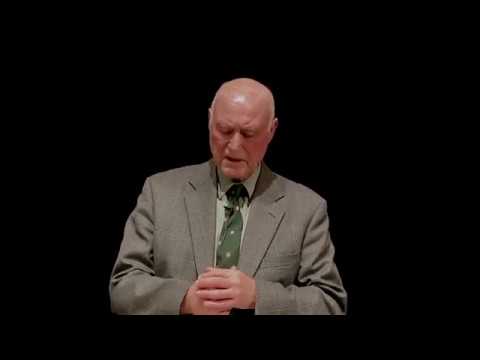
The transcript you provided captures a wide‑ranging public lecture by former Royal Navy microwave instructor Barry Trower. Trower’s central claim is stark: by the early 1960s military scientists already understood that low‑level microwaves could alter brain waves, damage DNA and impair fertility, yet the hazard was buried under permissive thermal‑only exposure limits that still shape global standards.
In the following expanded article we unpack Trower’s main points, update them with peer‑reviewed evidence, place them in historical context, and examine the legal and ethical questions they raise. Whether you are a parent, policy‑maker, medical professional or technologist, the aim is to arm you with a clear, balanced understanding of what the science really says—and what it still cannot answer.
1 From Radar to Smartphones: A Short History of Microwave Research
1.1 1940s–1960s – The clandestine era
-
Post‑war radar labs on both sides of the Iron Curtain mapped organ‑specific “resonance” frequencies and documented behavioural effects in animals and humans. Much of the work remained classified, but declassified Soviet and U.S. reports show that by 1962 researchers had induced changes in heart rhythm, endocrine function and mood at power densities far below levels that heat tissue.
-
In 1953 U.S. Navy engineer Herman P. Schwann proposed an exclusively thermal limit: keep whole‑body heating under 1 °C in six minutes and RF is “safe.” Military planners adopted the idea because it was simple to measure and unlikely to impede radar or future portable radios.
1.2 1965 – The civil‑market pivot
Recognising the commercial potential of mobile communications, U.S., Canadian, U.K. and NATO officials agreed informally to freeze exposure standards at the 6‑minute thermal threshold. Any acknowledgement of non‑thermal effects, they noted, could open the floodgates to liability claims. Trower cites a 1976 U.S. Defense Intelligence Agency memo warning that strict limits would create “unfavourable effects on industrial output and military function.”
1.3 1990s – The smartphone explosion
When analogue “1 G” phones appeared, governments simply imported the Schwann‑based limits into civilian regulations. The International Commission on Non‑Ionizing Radiation Protection (ICNIRP) 1998 guidelines, still used (with minor updates) in 42 % of countries, average exposure over six minutes for the general public—the same metric Schwann proposed 71 years ago. icnirp.org
2 Why the Thermal‑Only Paradigm Is Contested
2.1 Large animal studies point to carcinogenicity
In 2018 two flagship toxicology studies shook the consensus:
| Study | Signal & Dose | Key Findings |
|---|---|---|
| U.S. National Toxicology Program (NTP) | 900 MHz GSM & CDMA, whole‑body, 1.5–6 W kg⁻¹ SAR | Clear evidence of malignant schwannomas of the heart in male rats; some evidence of gliomas in the brain. ntp.niehs.nih.gov |
| Ramazzini Institute (Italy) | 1.8 GHz base‑station signal, 0.001–0.1 W kg⁻¹ (thousands‑fold below phones) | Same tumor types (schwannoma, glioma) in Sprague‑Dawley rats. Environmental Health Trust |
Both laboratories used lifetime exposures and meticulous pathology. Although the doses are higher (NTP) or lower (Ramazzini) than typical phone use, the convergence of rare tumour types convinced many scientists that non‑thermal mechanisms deserve serious attention.
2.2 IARC classification
Back in 2011 the International Agency for Research on Cancer reviewed human epidemiology and animal data and placed RF radiation in Group 2B: “possibly carcinogenic to humans.” iarc.who.int The agency is now revisiting the evidence and may move RF to a higher risk category, echoing the defecting ICNIRP member referenced by Trower.
2.3 Mechanisms under investigation
Researchers have documented oxidative stress, altered calcium signaling, DNA strand breaks and circadian gene disruption at non‑thermal intensities. Whether any single pathway can explain the NTP/Ramazzini tumours is still debated, but the weight of evidence contradicts the idea that heating is the only relevant variable.
3 Children, Pregnancy & the Developing Brain
3.1 Dosimetry matters
Because a child’s skull is thinner and contains more conductive fluid, modelling shows deeper brain penetration at 900–1800 MHz compared with adults. Most national regulators nonetheless apply the same whole‑body limits to pregnant women, infants and adults. The ICNIRP 2020 revision concedes that “children may have a lower tolerance,” but leaves the numeric limits unchanged. icnirp.org
3.2 Epidemiology
-
A 2019 meta‑analysis covering 13 cohorts found that prenatal or early‑life mobile‑phone exposure correlated with a small but significant increase in behavioural problems at age 7.
-
Several cohort studies (Denmark, USA, Korea) report higher miscarriage risk with maternal exposure to magnetic fields ≥ 1.6 μT, though confounders such as stress are hard to exclude.
-
Blue‑light exposure from LED screens, often overlooked in RF discussions, can delay melatonin release by 1–2 h via intrinsically photosensitive retinal ganglion cells that project to the hypothalamus. PMC Sleep is a cornerstone of child brain development, making cumulative light‑at‑night and RF stressors difficult to disentangle.
3.3 Wi‑Fi in classrooms
UNESCO’s ICT in Education programme promotes wireless tablets worldwide, yet medical academies in Cyprus, France, Israel, Italy and Russia now advise wired connections for pre‑school and primary grades. France, for example, bans Wi‑Fi in day‑care centres and requires routers in elementary schools to be switched off when not in use. The precautionary stance reflects not definitive proof of harm but the absence of long‑term safety data for brains that will spend their entire neurodevelopmental window bathed in multiple RF bands.
4 5 G and Beyond – What Is (and Isn’t) New
4.1 Beam‑forming & millimetre waves
Fifth‑generation networks add phased‑array antennas that steer narrow “pencil‑beams” at each handset. Average power remains similar to 4 G, but the spatial and temporal distribution is unprecedented, complicating exposure assessment and epidemiology.
At 24–39 GHz, absorption depth in human tissue is < 1 mm; concerns shift from brain tumours to skin, eye and immune effects. A World Health Organization review of 40–60 GHz military studies found reversible corneal heating at intensities ≥ 10 W m⁻²; ICNIRP’s public limit is 10 W m⁻² averaged over 6 minutes. Whether rapid‑fire 5 G bursts can create micro‑hotspots before thermal diffusion cools the tissue is unknown.
4.2 Trees as collateral damage?
Millimetre waves attenuate sharply in foliage. Internal planning memos obtained by the City of Sydney warned federal officials that roll‑out could “sacrifice trees for network performance.” emfacts.com Laboratory measurements by the U.S. National Institute of Standards and Technology confirm that leafy branches can cut signal strength by up to 70 %. NIST While no credible data show RF “killing” trees outright, telecom engineers do clear lines‑of‑sight wherever economic, leading to visible canopy loss in some pilot cities.
4.3 Environmental effects on insects and birds
Low‑power RF can interfere with magnetoreception in migratory species, and mmWave absorption by small‑bodied insects is predicted (through modelling) to raise body temperature fractionally. A 2024 Luxembourg modelling study estimated that 60 GHz exposure under realistic 5 G urban scenarios could elevate honey‑bee thorax temperature by up to 0.5 °C—biologically significant during summer foraging. Definitive field data remain scarce.
5 Law, Insurance & the Precautionary Principle
5.1 Liability exclusions
Since 2015 Lloyd’s of London standard commercial policies have contained Exclusion 32: no cover for claims “directly or indirectly arising out of, resulting from or contributed to by electromagnetic fields, electromagnetic radiation, electromagnetism, radio waves or noise.” JRS Eco Wireless Other insurers have followed suit, effectively shifting long‑tail health risks onto manufacturers, network operators and, ultimately, taxpayers.
5.2 Human‑rights frameworks
International lawyers argue that untested RF deployments conflict with the UN Convention on the Rights of the Child (best interests principle) and the European Convention on Human Rights (Article 2 right to life). In 2023 the Belgian Constitutional Court cited precaution in upholding stricter Brussels exposure limits—three to 15 times lower than ICNIRP—until independent 5 G health reviews are completed.
5.3 Experimentation without consent
Trower invokes the Nuremberg Code, which prohibits involuntary experiments with risk of harm. Critics counter that ambient RF is a by‑product of essential infrastructure, not a medical experiment. Yet when power densities rise by orders of magnitude to deliver entertainment rather than emergency communications, the moral line blurs.
6 Practical Strategies for Risk Reduction
-
Prioritise wired over wireless indoors. Fibre‑to‑the‑desk and Power‑over‑Ethernet can deliver gigabit speeds without chronic airborne RF.
-
Use speaker mode or air‑tube headsets to keep the handset away from the head and torso.
-
Text instead of voice when feasible; duty‑cycle matters.
-
Disable unnecessary radios (Wi‑Fi, Bluetooth, 5 G SA) in phone settings, especially in vehicles where metal reflections boost exposure.
-
Hard‑switch routers off at night; sleep is when the brain consolidates memory and repairs DNA.
-
Install shielding sparingly; poorly designed case‑plates can force the phone to increase power output, defeating the purpose.
-
Demand transparent siting guidelines so that small‑cell antennas are not bolted to bedroom walls without community consent.
7 Alternatives & Future Directions
-
Li‑Fi (visible‑light communication) offers gigabit throughput via ceiling LEDs with negligible RF. Trials in French hospitals show interference‑free telemetry and secure data links.
-
Space‑based broadband (direct‑to‑device satellites) could allow regulators to de‑densify terrestrial towers near homes and schools, though aggregate microwave skyshine must be monitored.
-
Continuous research mandate – Public Law 90‑602 in the U.S., cited by Trower, already authorises the Department of Health to revise exposure limits as science evolves; Congress simply needs to fund it.
Conclusion
The story of microwave standards is not a conspiracy thriller so much as a case study in regulatory path‑dependence: early military convenience hardened into civilian doctrine long before science caught up. Seventy years later the evidence landscape looks very different. Large animal experiments show rare tumours, insurer exclusions hint at undisclosed actuarial concerns, and blue‑light research reveals neuroendocrine effects that thermal models cannot explain.
Does that mean every cell‑phone call or classroom router is a ticking time bomb? Probably not. RF bioeffects scale with frequency, modulation, duty‑cycle, genetics and myriad co‑stressors. But history suggests waiting for absolute certainty is unwise—think leaded petrol or asbestos. The prudent course is to apply no‑regrets measures now: wire what we can, shield what we must, site antennas with diligence, and fund independent, reproducible research equal to the societal stakes.
Future generations will judge us not on whether we rolled out 5 G one year faster, but on whether we balanced innovation with the timeless duty to safeguard life.
Call to Action
-
Parents & educators: Audit RF sources in homes and schools; push for wired networks where children learn and sleep.
-
Policy‑makers: Require environmental and health impact assessments before spectrum auctions; incorporate non‑thermal metrics.
-
Engineers: Design “low‑RF‑by‑default” devices that use fibre, Li‑Fi or ultra‑low‑power protocols indoors.
-
Researchers: Replicate NTP and Ramazzini findings with contemporary 4 G/5 G signals and realistic exposure patterns.
-
Citizens: Stay informed, demand transparency, and remember that technology exists to serve humanity—not the other way around.