What the new evidence means for public policy, industry standards, and everyday wireless habits
Key take-away: A systematic review funded in part by the World Health Organization (WHO) concludes with high certainty that radio-frequency (RF) radiation from cell phones induces two rare malignant tumours in laboratory animals—the exact same tumours already seen in heavy mobile-phone users. The finding shatters the “heating-only” dogma that underpins today’s FCC/ICNIRP limits and sets the stage for a wholesale rewrite of wireless-safety policy.
The headline findings
Environment International has just published “Effects of Radiofrequency Electromagnetic Field Exposure on Cancer in Laboratory Animal Studies” by Mevissen et al. (2025). The working group evaluated 52 controlled animal experiments and applied the GRADE framework used by WHO drug-safety panels. Their verdict:
| Tumour type (rodents) | Certainty rating | Echoed in human studies? |
|---|---|---|
| Malignant schwannomas of the heart | High | Acoustic neuroma / vestibular schwannoma |
| Gliomas of the brain | High | Glioblastoma, astrocytoma |
| Pheochromocytomas (adrenal) | Moderate | Suggestive |
| Hepatoblastomas (liver) | Moderate | Limited data |
| Lymphomas | Low/Inconsistent | Limited data |
The exposure levels that triggered cancer in rats—whole-body SARs as low as 0.1 W kg⁻¹—are up to 40 × lower than the current FCC public limit. ScienceDirect
Why “high certainty” is a regulatory earthquake
High certainty under GRADE means that further research is very unlikely to change the conclusion. In toxicology, this rating has historically led agencies to upgrade chemicals such as benzene and asbestos from “possible” to “known” human carcinogens. Crucially, every agent ever designated a human carcinogen has first produced tumours in animal bioassays. Regulatory inertia, not lack of evidence, now keeps RF radiation in the outdated IARC Group 2B bracket.
How the new review dovetails with previous mega-studies
| Study | Species / exposure | Main tumours | Concordant with WHO review? |
|---|---|---|---|
| U.S. National Toxicology Program (2018) | 2-year near-field RF (900 & 1 900 MHz) | Heart schwannoma, brain glioma | ✓ |
| Ramazzini Institute (2018) | Lifetime far-field RF (1 800 MHz GSM) | Heart schwannoma, brain glioma | ✓ |
Both projects reported dose-response trends below tissue-heating thresholds, directly contradicting FCC assumptions. Wikipedia
What the experts say
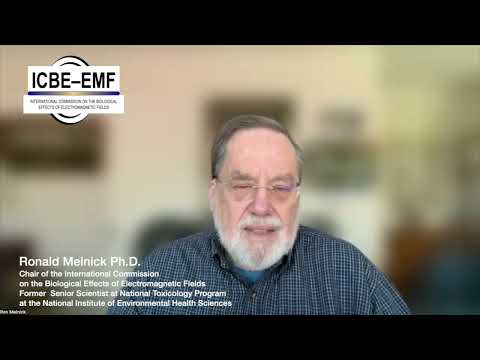
“Current limits, set in the 1980s, rest on the notion that harm occurs only through heating. That assumption is now proved wrong.”
—Ronald L. Melnick, PhD, former senior toxicologist, NTP
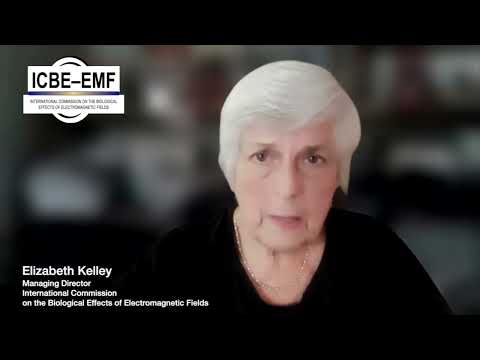
“267 scientists have signed the EMF Scientist Appeal. We agree the limits are obsolete and fail to protect public health.”
—Libby Kelley, Managing Director, ICBE-EMF
Their full video statements are embedded below.
Mechanism: oxidative stress → DNA damage → cancer
Hundreds of peer-reviewed papers show that low-level RF fields provoke oxidative stress, generating reactive oxygen species that in turn:
-
Damage DNA strands.
-
Trigger error-prone repair and chromosomal instability.
-
Select for aberrant cell populations with growth advantages (the seedbed of tumours).
This mechanistic chain is no longer speculative; it meets several Bradford–Hill criteria (strength, consistency, plausibility) and obliterates the “no mechanism” objection often raised by industry consultants.
Policy implications for the United States
| Action | Why it’s necessary |
|---|---|
| Open an emergency FCC rule-making docket. | The agency’s current limits (47 CFR 1.1310) ignore non-thermal endpoints. |
| Transfer RF health oversight to the EPA. | Public Law 90-602 mandates continuous review of radiation science—yet has never been applied to RF. |
| Repeal or amend Section 704 of the 1996 Telecom Act. | This clause prevents states and municipalities from citing health concerns when siting towers. |
| Institute interim exposure caps based on observed animal NOAELs. | A whole-body SAR of 0.1 W kg⁻¹ already produced tumours; interim limits should stay well below that. |
| Fund NTP replication studies immediately. | Congress halted NTP RF work in 2023. The WHO review makes resumption a legal and ethical imperative. |
Global ramifications
-
IARC re-classification: With high-certainty animal evidence now on record, a new Monograph could push RF into Group 1 (“carcinogenic to humans”).
-
Insurance & liability: Lloyd’s of London excluded RF claims in 2015. Expect broader exclusions and shareholder litigation as the risk becomes “foreseeable.”
-
Product design: Engineering solutions exist—e.g., dynamic power throttling and Li-Fi (optical wireless)—that can cut emissions by orders of magnitude without sacrificing connectivity.
Practical steps until regulations catch up
-
Distance is your friend. Keep phones off-body; use speaker-mode or air-tube headsets.
-
Mind the bars. Avoid calls in 1–2 bar areas; RF output skyrockets as the phone struggles to reach the tower.
-
Hard-wire when you can. Ethernet or fibre beats Wi-Fi; Li-Fi beats both indoors.
-
Model safe behaviour for children. A child’s skull is thinner and tissues have higher water content—RF penetrates deeper.
-
Night-time detox. Airplane mode or powered-down devices while you sleep reduce cumulative exposure.
Frequently asked questions
| Question | Short answer |
|---|---|
| Doesn’t the WHO still say phones are safe? | The 2014 WHO factsheet has not yet incorporated the new review; policy documents lag behind peer-reviewed science. |
| Is 5 G worse than 4 G? | Higher-band 5 G introduces dense small-cell networks, multiplying local emitters. Power levels per device may stay similar, but ubiquitous proximity raises cumulative dose. |
| What about Wi-Fi routers? | Same spectrum class, same biological endpoints. Hard-wiring or optical links offer safer throughput. |
Conclusion
For decades the wireless debate hinged on “insufficient evidence.” That era is over. By financing and publishing a review that reaches high certainty of animal carcinogenicity, the World Health Organization has—perhaps inadvertently—pulled the rug out from under legacy exposure limits. Regulatory agencies now face a stark choice: align with modern science or knowingly uphold standards that permit a proven carcinogen to saturate homes, schools, and ecosystems.
The data are in; only the politics remain unresolved.