Background — RF Safe’s Dashboard Doctrine
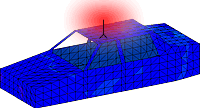
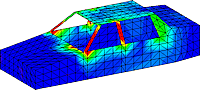
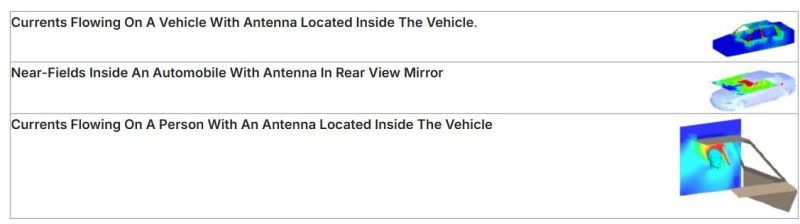
Long before smartphones, RF Safe explained a simple physics truth: a steel‑bodied car (or an all‑metal elevator) behaves like a partial Faraday cage. Radio‑frequency (RF) energy reflects from metal walls and glass laminates, forcing a handset to push its transmitter harder and recycling stray energy back toward passengers. Our Nokia‑era FDTD visualisations showed “hot‑spots” arcing around roof pillars and concentrating in the seats. The remedy we recommended in the 1990s still holds:
-
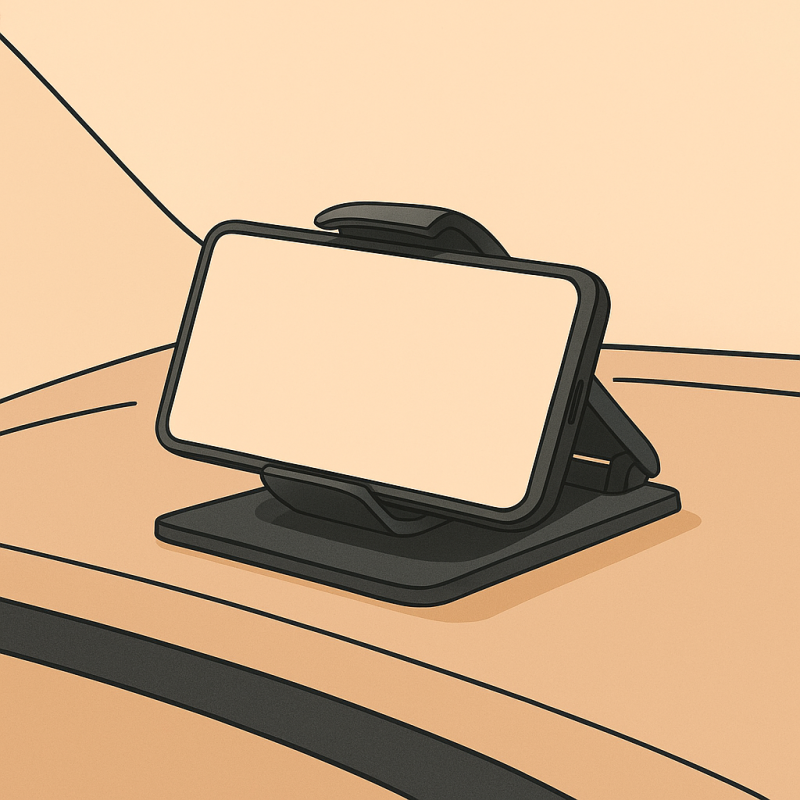
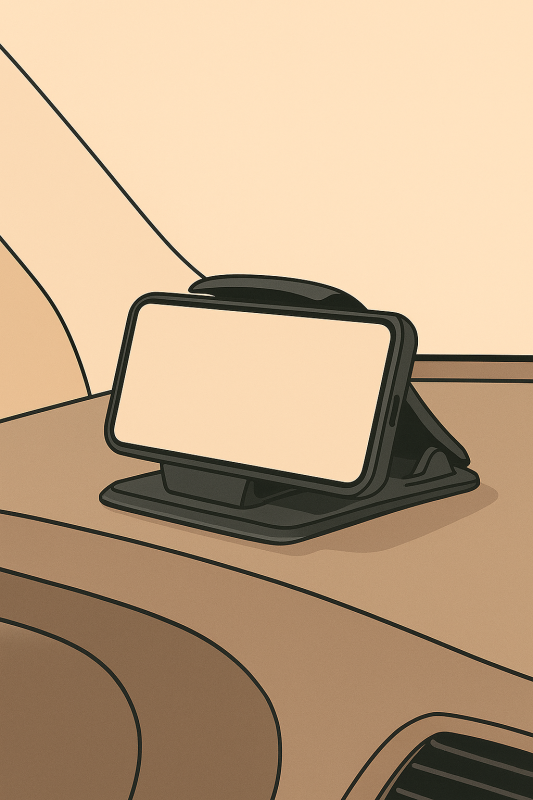
Get the antenna outside the cage – either by an external antenna port (gone today) or, at minimum, by parking the phone high on the dashboard so its rear faces the windshield.
2. New Peer‑Reviewed Proof
A 2025 study from the University of Patras placed high‑resolution anatomical models of a third‑trimester pregnant woman, her seven‑month fetus and a five‑year‑old child inside an elevator cabin and simulated phone calls at 1 GHz and 1.8 GHz in three realistic talk positions. Key findings:
| Subject | Worst‑case SAR<sub>10 g</sub> | ΔT<sub>max</sub> | What Drove It |
|---|---|---|---|
| 5‑year‑old child | ≈ 5 W kg <sup>‑1</sup>(cheek, 1 GHz) | ≤ 1 °C at ear skin | Metal walls + cheek position |
| Pregnant woman | ≈ 0.3 W kg<sup>‑1</sup> (tilt, phone 20 cm from bump) | ~0.16 °C abdomen | Child’s phone close to abdomen |
| Fetus | ≈ 0.07 W kg<sup>‑1</sup> | ~0.04 °C in amniotic fluid | Deeper 1 GHz penetration |
Whole‑body SAR jumped 20‑60 % for all subjects once the metallic enclosure was introduced.
These numbers validate the dose inflation RF Safe predicted decades ago for cars, buses and trains.
3. Why Today’s Detachable “Anti‑Radiation” Cases Make Things Worse
Over the last ten years a crop of accessories has claimed to “block” or “deflect” radiation:
-
Detachable wallet‑style cases (e.g., SafeSleeve®, DefenderShield®)
-
Design flaw #1 – large steel plate over the antenna. The plate is there so the phone can click to a magnetic mount, but it blocks the handset’s antenna aperture. The modem compensates by raising transmit power — exactly the opposite of what consumers expect.
-
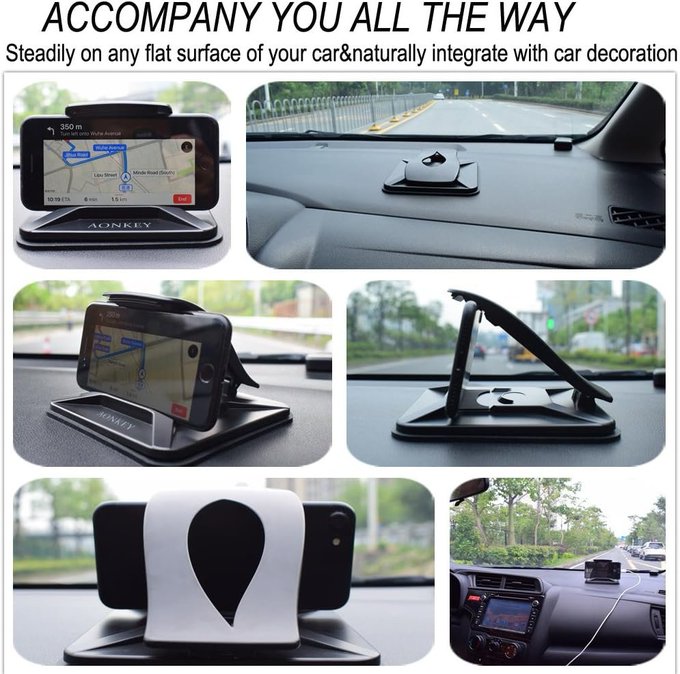
Design flaw #2 – vent‑clip car mounts. Marketing photos encourage users to park the plated phone on an A/C vent, the worst possible location: dead‑centre in the passenger cavity, surrounded by reflective structure, and now throttled by the Faraday effect identified above.
-
-
Laptop “shields” that cover only the lap
-
They push the transmitter closer to the abdomen (pregnancy risk) while leaving the torso unshielded and forcing upward reflection.
-
The Patras elevator paper proves the flaw quantitatively: even with no metal plate on the phone, localized SAR in a child’s head already doubled the ICNIRP limit once reflections were present. Adding a plate that forces higher handset power or moving the device deeper into the cavity further amplifies exposure.
4. Updated RF Safe Recommendations
| Scenario | Do | Don’t |
|---|---|---|
| Driving / riding | • Mount the phone high on the dash or windshield with its back to the glass. • Use speaker mode (on dash mount). • Download data (maps, playlists) before the trip. |
✘ Pocket, console or vent‑clip placement. ✘ Metal‑backed detachable cases. ✘ Bluetooth ear‑buds (add a second transmitter). |
| Elevators, buses, trains | • Delay the call or text until doors open. • Keep the handset in airplane mode if practical. • Supervise children: flip the RF Safe QuantaCase® shield toward the body. |
✘ Streaming video or large uploads while inside. ✘ Handing a live phone to a child pressed to the cheek. |
| Pregnancy | • Maintain distance – use speaker, wired headset, or shield‑forward case. • Store the handset in a bag, not clothing. |
✘ Belly‑level tablet or laptop use without a proper shielding blanket. ✘ “Lap shields” that bring Wi‑Fi radios closer to the bump. |
| Year | Key finding | Source |
|---|---|---|
| 2014 | RF levels triple inside a metal vehicle simulator compared with open air. | Polish driver‑cabin study ijomeh.eu |
| 2020 | Call inside a car “considerably degrades antenna performance” ⇒ handset ramps‑up output power; head‑SAR rises accordingly. | Koya University modelling bp.koyauniversity.org |
| 2021 | Multi‑source, multi‑band EMF in connected cars now covers 100 MHz – 100 GHz (cellular, Wi‑Fi, Bluetooth, radar). | imec survey imec-publications.be |
| 2019 | In‑vehicle EMF is “mainly elevated due to induction in metal parts and RF bouncing off interior panels.” | Three‑fold‑increase study Blushield USA |
5. Industry & Policy Actions We Still Need
-
Bring back an external‑antenna pathway (snap‑in cradle or USB‑C RF routing) so motorists can hard‑pipe RF outside the shell.
-
Smartphone firmware “vehicle‑mode” power caps that trigger when CAN‑bus/Bluetooth telemetry confirms the device is in a car.
-
Regulatory test updates – FCC/IEC 62209‑1528 must add reflective‑cavity worst‑case scenarios (elevators, cars, buses) to SAR compliance.
-
Truth‑in‑labelling for accessories – any product that covers a phone’s antenna with metal should declare the resulting power‑boost and exposure increase.
6. Key Take‑Aways
Physics, not hype, dictates RF exposure. Metal enclosures amplify dose and force phones to work harder. While many accessory brands chase cosmetic “radiation‑blocking” claims, only designs that respect antenna physics and placement geometry can genuinely reduce exposure. RF Safe’s guidance — first published in the pager‑belt‑clip era — remains the benchmark because it is rooted in electromagnetic fundamentals and now reinforced by state‑of‑the‑art dosimetry.
Stay informed, stay sceptical of quick‑fix gadgets, and — above all — stay RF Safe.