In 1954, a massive nuclear test at Bikini Atoll unleashed destruction thought impossible to overcome. Scientists expected the area to remain lifeless due to radiation, but decades later, life was thriving. Similarly, after the Chernobyl disaster, Fukushima accident, and other nuclear catastrophes, nature has shown astonishing resilience. Animals, plants, and fungi not only survived but seemed to grow stronger and adapt rapidly. How could evolution work so quickly? The answer lies in ancient genetic mechanisms, deeply embedded in the DNA of all life on Earth, capable of responding swiftly to extreme radiation.
Understanding this phenomenon is critical—not only for comprehending our past but potentially unlocking humanity’s future, especially as we aim to venture deeper into space.
Unlikely Survivors of Nuclear Catastrophes
Bikini Atoll: Flourishing Against All Odds
On March 1, 1954, during Operation Castle, the U.S. detonated Bravo, a nuclear bomb significantly more powerful than expected. The blast, 1,000 times stronger than Hiroshima, vaporized islands and created extreme radioactive conditions. Yet, researchers later found life thriving:
- Coral Reefs: Vast coral colonies quickly occupied the crater created by the blast.
- Coconut Crabs: These resilient crustaceans absorbed dangerous radiation levels but thrived without apparent harm.
How was such rapid recovery possible? The creatures activated genetic sequences designed explicitly to repair radiation-induced DNA damage.
Chernobyl’s Wildlife Wonders
Following the 1986 explosion at Chernobyl, scientists initially believed the area would remain lifeless. Instead, the wildlife adapted remarkably within just a few decades:
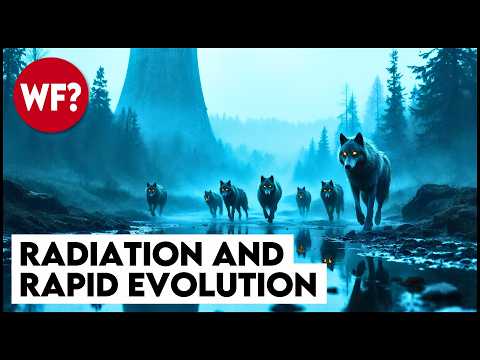
- Radiation-Resistant Wolves: Genetic studies showed wolves quickly developing advanced DNA repair mechanisms. Each generation became increasingly resistant.
- Unique Dogs: Abandoned pets evolved distinct genetics, with adaptations so profound scientists now consider classifying them as a new species.
- Eastern Tree Frogs and Birds: Frogs developed increased melanin, turning black to protect from radiation, and birds evolved darker feathers for similar reasons.
Fukushima’s Rapid Adaptation
After the Fukushima disaster in 2011, researchers observed wildlife rapidly developing stronger antioxidant systems and accelerated reproductive rates. The pace of adaptation was unprecedented, occurring within only 15 years—too rapid for traditional evolutionary explanations.
Ancient Genetic Mechanisms Awaken
These cases across diverse ecosystems led researchers to a critical realization: these weren’t new evolutionary traits but ancient genetic sequences reactivating under stress.
Fungi: Natural Radiation Converters
A striking example of ancient adaptation is found in fungi at nuclear disaster sites:
- Chernobyl’s Black Fungus: These fungi not only resist radiation but actively feed on it, converting gamma radiation into chemical energy.
- NASA Experiments: Fungi were tested aboard the International Space Station, proving capable of processing cosmic radiation similarly to how plants process sunlight.
These fungi possess genes that are millions of years old, suggesting ancient life forms evolved powerful radiation resistance long before humanity’s existence.
Earth’s Natural Nuclear Reactors
How did ancient life evolve radiation resistance? The discovery of natural nuclear reactors, like those found at Oklo in Gabon, West Africa, provides insight. These naturally occurring reactors, active approximately two billion years ago, created conditions similar to modern-day nuclear sites. Evidence suggests:
- Global Phenomenon: Similar ancient reactors operated in locations like Colorado and Australia.
- Ancient Microorganisms: Earth’s oldest fossils, like those in Gunflint Chert, reveal microorganisms with radiation-resistant adaptations mirroring modern bacteria.
These biological defenses, passed down genetically, persist even though current environmental radiation levels are significantly lower than during Earth’s early history.
Human Resilience to Radiation
Humans, too, possess these ancient genetic defenses. Populations living near naturally radioactive areas demonstrate exceptional resilience:
- Ramsar, Iran: Residents experience radiation levels significantly above international safety standards yet maintain normal lifespans and cancer rates. Their cells repair DNA damage rapidly, a trait passed down through generations.
- Guarapari, Brazil: Locals have adapted to radioactive black sands, with genetic studies showing advanced DNA repair abilities inherited over thousands of years.
This human resilience underscores our ancient relationship with radiation, raising fascinating possibilities about our future adaptability.
Implications for Human Evolution and Space Exploration
Understanding these genetic mechanisms isn’t merely academic—it’s a roadmap for humanity’s future in space:
- Enhanced Human Abilities: As we explore and colonize space, activating these genetic defenses could help humans survive and thrive in harsh radiation environments.
- Potential Human Adaptations: Future generations might consciously activate these dormant abilities, developing natural radiation shields, rapid DNA repair, and enhanced metabolic control.
Long-term, humans could develop extraordinary adaptations, like skin generating protective fields or the ability to metabolize radiation as food, mirroring fungi’s abilities on Earth.
Quantum Biology: The Next Evolutionary Frontier
Further into humanity’s future, the implications of quantum biology emerge as profoundly significant. Quantum mechanics is already at play in nature:
- European Robins: Navigate using quantum entanglement within proteins in their eyes.
- Dogs’ Sense of Smell: Utilizes quantum tunneling to detect scents at a molecular level.
- Plant Photosynthesis: Relies on quantum superposition, allowing plants to harness energy with near-perfect efficiency.
These phenomena suggest humans, too, might eventually harness quantum biology, unlocking new senses and abilities currently beyond our comprehension.
Consciousness and Quantum Reality
Physicists Roger Penrose and Stuart Hameroff propose consciousness arises from quantum states within brain cells, specifically microtubules. Initially dismissed, this idea is now gaining credibility:
- Quantum Consciousness: Microtubules within neurons may create quantum states leading to conscious experiences.
- Shared Quantum Reality: This concept suggests a profound interconnectedness across individuals and the universe, highlighting consciousness as part of a universal quantum fabric.
Conclusion
Life’s astounding resilience in radioactive zones reveals far more than just adaptation—it illuminates ancient genetic blueprints that remain dormant until awakened by extreme conditions. These findings offer profound insights into humanity’s past, present, and potential future, especially regarding space exploration and evolution.
As we stand on the threshold of deep space exploration, these ancient genetic defenses and the emerging field of quantum biology might be our greatest allies. Understanding our connection to the cosmos, from the atoms within us to our potential quantum consciousness, reminds us that humanity’s destiny could lie among the stars.
In the end, we are, as Carl Sagan beautifully articulated, “made of star stuff.” Perhaps our true home, and our ultimate evolution, lies waiting in the vastness of the universe, beckoning us to reach out and embrace our cosmic heritage.