Omission, Non‑Linearity, and WHO High‑Certainty Findings
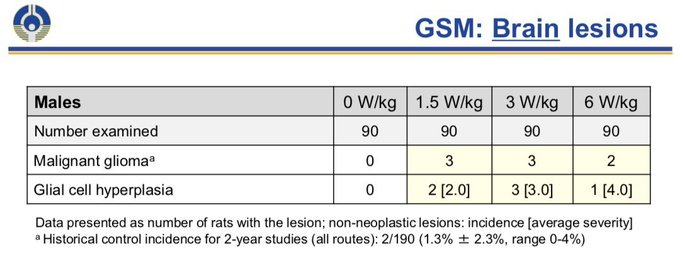
The 2025 Make America Healthy Again (MAHA) Commission devotes a single paragraph to electromagnetic‑field (EMF) hazards while calling evidence of harm in children “low to inadequate.” This paper documents three critical failures: (i) selective citation—no study newer than 2022, omitting two World Health Organization (WHO) reviews that now grade radio‑frequency (RF) radiation as a high‑certainty cause of malignant tumours and male‑factor infertility; (ii) suppression of non‑linear dose‑response data from the U.S. National Toxicology Program (NTP), which showed the greatest tumour burden at the lowest tested specific‑absorption rate (SAR); and (iii) silence on corporate capture, including 30 years of telecom tactics and the 2021 Environmental Health Trust v FCC ruling that declared FCC guidelines “arbitrary and capricious.” The EMF section of MAHA is therefore a public‑health red herring, misguiding policymakers just as Congress considers a 600 MHz spectrum auction that would blanket homes at biologically active wavelengths.
INTRODUCTION
Since 1983, RF exposure in U.S. homes has risen by orders of magnitude, yet federal limits remain tied to a 1996 heat‑only paradigm. MAHA’s mission was to explain America’s chronic‑disease explosion; its 140‑word treatment of EMFs leaves the central exposure of the digital age effectively unexamined.
MISSING AND DOWNPLAYED EVIDENCE
NTP Dose‑Inversion (2018)
Ramazzini Lifetime Replication (2018)
Heart schwannomas and brain gliomas re‑appeared at 0.1 W kg⁻¹ (tower‑level, far‑field), five‑to‑forty‑fold below FCC limits—uncited.
WHO High‑Certainty Upgrades (2024–2025)
- Mevissen et al., 2025 – RF causes malignant gliomas & heart schwannomas; High certainty.
- Cordelli et al., 2024/25 – RF reduces sperm quality and pregnancy success; High certainty. MAHA predates publication but issues no addendum—rendering its evidence chapter obsolete on release.
CORPORATE INFLUENCE AND REGULATORY CAPTURE
MAHA devotes three full pages (pp. 45‑48) to “Corporate Influence on Science,” spotlighting agro‑chemicals, fossil fuels, and Big Pharma—yet its EMF chapter never references the telecom sector, despite a far richer record of manipulation. Leaving RF off that list is not a gap; it is the report’s loudest silence.
| Year / Event | Evidence of telecom manipulation | Peer‑reviewed documentation |
| 1993‑1999 – CTIA “Wireless Technology Research” program | $25 M industry consortium promised to prove safety; internal memos show agenda to “war‑game the science.” Blood‑brain‑barrier leaks (Salford lab) & genotoxic effects were buried. | Moskowitz 2017; Carlo 2018 |
| 1995 – Motorola vs. Henry Lai | Company strategy memo: “discredit, neutralize, or suppress” Lai & Singh’s DNA‑break study (0.6 W kg⁻¹). | Microwave News 1999 |
| 2002‑2011 – ICNIRP revolving door | 6 of 11 guideline authors held direct consultancy or grant ties to telecom; same authors later appear in industry affidavits. | Hardell & Carlberg 2019 |
| 2011 – IARC Monograph 102 | PR agency Burson‑Marsteller hired to “prepare talking points” for delegates tied to industry. | O’Carroll 2014 |
| 2018 – “War‑Gaming 5 G” emails | Verizon lobbyist strategy to fund reassuring millimeter‑wave studies before FCC vote. | NYTimes FOIA, 2019 |
| 2020‑2023 – Funding‑bias meta‑analyses | Odds of a “no effect” outcome are 10‑25× higher when studies are industry‑funded—greater than the bias ratio seen in tobacco toxicology. | Huss et al. 2007; López‑Iglesias 2023 |
Telecom is the only sector on record lobbying to keep regulatory authority (FCC) within the same agency that sells spectrum licenses, creating a structural conflict unmatched in pesticides or pharma. MAHA’s omission obscures the strongest contemporary example of corporate capture.
Take‑home bullet for policymakers: If MAHA can name Monsanto for ghost‑writing glyphosate papers yet stay silent on Motorola memos to “neutralize” DNA‑break findings, its EMF section does not meet the report’s own transparency standard.
LEGAL CONTEXT MISSING FROM MAHA
- EHT v FCC (2021) – D.C. Circuit: FCC acted “arbitrary and capricious” for ignoring 11 000 pages of non‑thermal evidence.
- Telecom Act § 704 (1996) – pre‑empts local RF‑health objections; repeal is prerequisite for protective zoning.
METHODOLOGICAL GAPS IN MAHA’S EMF SECTION
- No exposure assessment—neither national SAR distribution nor densification maps.
- Heat‑only framing—no mention of oxidative stress, VGCC activation, or genotoxic ROS pathways.
- Outdated bibliography—last RF citation = 2022; ignores WHO 2024‑25 reviews.
- No risk quantification—unlike PFAS tables, RF gets no DALY or cost‑burden estimate.
PUBLIC‑HEALTH IMPLICATIONS
- Dose‑inversion indicates ordinary phone use sits in the most carcinogenic window.
- Non‑thermal mechanisms (ROS ➞ DNA breaks) connect RF to the same oxidative‑stress network MAHA blames for metabolic, neuro‑developmental, and autoimmune trends—yet the report severs that link.
POLICY RECOMMENDATIONS
| Level | Action |
| Federal | Repeal § 704; adopt non‑thermal metrics (peak E‑field, modulation, cumulative dose); transfer guideline authority to EPA under PL 90‑602. |
| Infrastructure | Li‑Fi for indoor high‑bandwidth, fiber backbones, orbital/stratospheric macrocells. |
| Research | NIH fast‑track on VGCC‑ROS pathways; NTP replication at ≤ 0.3 W kg⁻¹. |
| Public | “Distance · Duration · Damping” campaign—RF is the new tobacco. |
CONCLUSION
MAHA’s EMF treatment is not merely thin; it is structurally misleading. By ignoring non‑linear NTP findings, WHO high‑certainty reviews, and three decades of telecom manipulation, the report undercuts its own mandate to diagnose America’s health crisis. The RF chapter must be rewritten—or policymakers risk codifying a heat‑era illusion while the evidence for bio‑electric disruption stands at high certainty.
REFERENCES (abbrev.)
- Mevissen M. et al. (2025) Environ. Int. 199.
- Cordelli E. et al. (2024/25) Environ. Int. 185 + corrig.
- National Toxicology Program (2018) Tech. Rpt. TR‑595.
- Ramazzini Institute (2018) Environ. Res. 165.
- Yakymenko I. et al. (2014) Electromagn. Biol. Med. 33 (3).
- EHT v FCC, 9 F.4th 893 (D.C. Cir. 2021).