TruthCase™ trains the habits that actually reduce radiation.
TruthCase™ (QuantaCase®) is built to do one thing better than anyone else: expose the flaws in typical “anti-radiation” cases and train you to hold and carry your phone so the shield stays between you and the source — without magnets, metal loops, plate steel, or giant ear-side holes that make phones transmit harder.
Design
Shield placed between you & the phone for calls and pocket carry, with continuity at the ear.
- ANo metal loops. No magnets. No plate steel near antennas.
- BShielded ear-side path — no big hole where you need reduction most.
- COhmmeter-checkable shield layer so you can verify continuity yourself.
Practice
TruthCase™ is not a talisman. It’s a trainer for safer habits.
- 1Calls: close the cover toward your head, then use speaker or air-tubes for long calls.
- 2Pocket: cover toward your body; back pocket often best.
- 3Night: distance or airplane mode — don’t sleep with phones on the pillow.
Roadmap
Products help today; policy and technology finish the job for children.
- •Enforce Public Law 90-602 (HHS RF research & standards).
- •Fix Section 704 so communities can cite health in siting decisions.
- •Shift indoor bandwidth to Li-Fi (802.11bb) and wired links.
TruthCase™ Usage Guide — swipe the core habits
These are the same slides used in your in-case usage guide, loaded directly from
/class/user-guide/quantacase-guide.json. Swipe or click arrows, then tap “More” to open the full explanation.
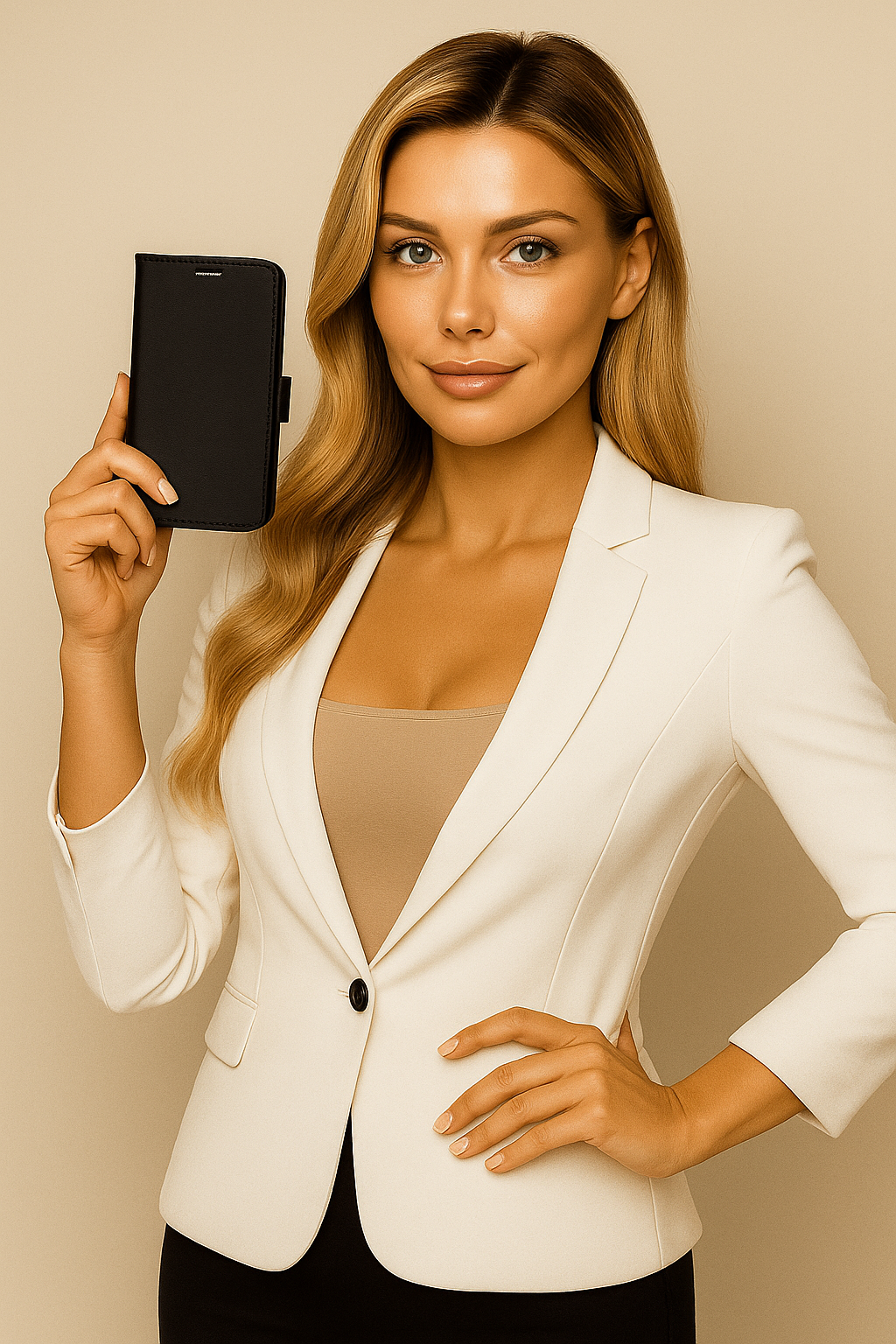
QuantaCase Usage Guide
QuantaCase Usage Guide
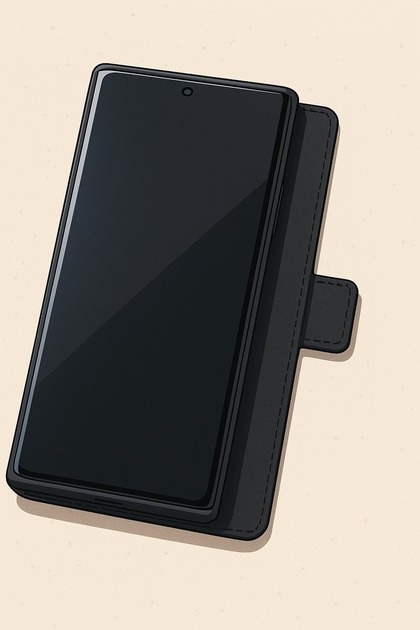
📴 Speakerphone Use
👉In this image, the QuantaCase’s front cover is flipped behind the phone, creating a small lip. This feature allows you to hold the phone without needing to grasp it in your palm, reducing the amount of radiation absorbed by your hand. Keep it away from the body when speaking hands-free.
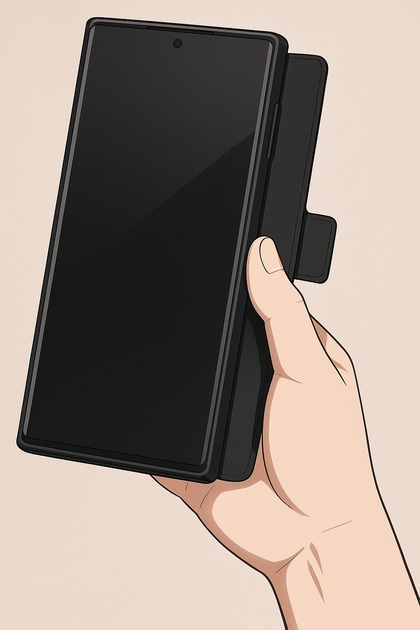
🤌 Speakerphone Hold
👉This image shows how to hold the phone comfortably with the QuantaCase on speakerphone mode. Notice how your thumb rests on the extended lip, providing a stable grip without wrapping your fingers around the phone’s sides. Speakerphone comfort, still clear audio, safe distance.
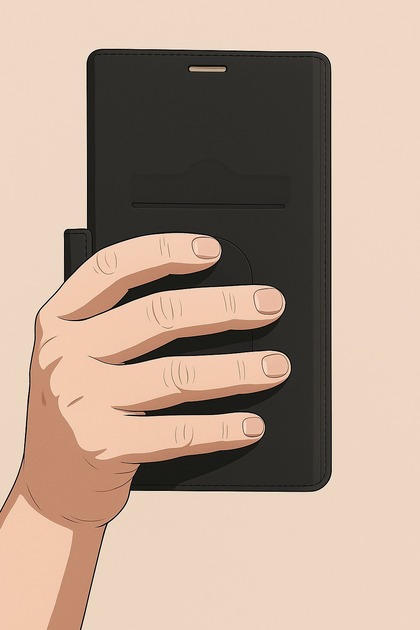
🧾 Speakerphone Hold
👉From behind, you can see how your fingers comfortably support the phone behind the microwave-shielded flap. This technique ensures a secure hold while minimizing direct contact with the phone’s sides, reducing radiation exposure. Maximum safety zone: keep exposure low with distance.
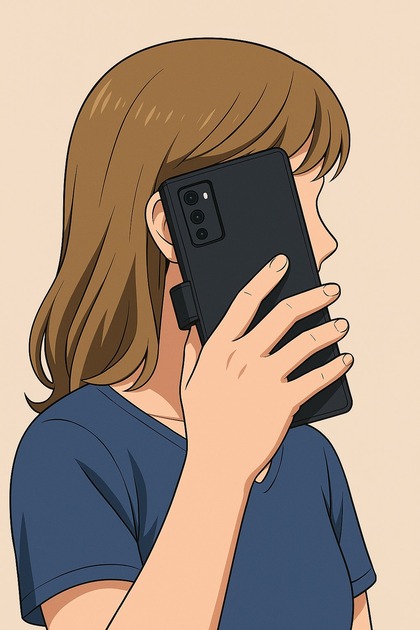
📢 Hold to Ear
👉This image demonstrates holding the QuantaCase to your ear for a private call. If circumstances require placing the phone directly against your head, always ensure the front shielding cover is closed over the front of the phone, positioning it between your head and the device. Additionally, before placing the phone to your ear, turn off all unnecessary transmitters such as Bluetooth and Wi-Fi to further minimize radiation exposure. Using your phone this way should be a last resort—whenever possible, use a headset or speakerphone for optimal safety.
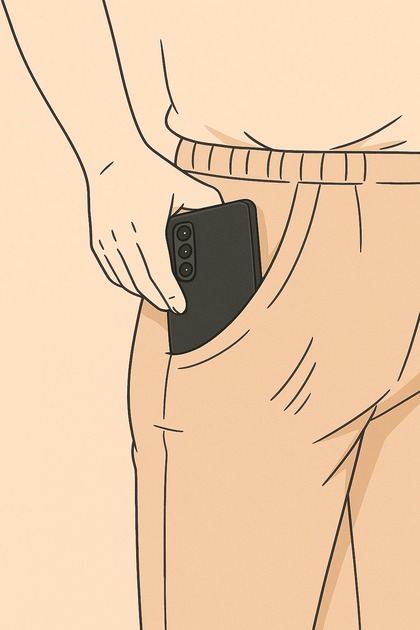
👉 Pocket Carry
👉In this image, the QuantaCase is illustrated as being placed into a pocket, highlighting the correct orientation in an unavoidable situation. QuantaCase does not recommend regularly carrying your phone in your pocket. However, if no other option exists, always ensure the front shielded cover is closed over the screen, positioned between your body and the phone, with the camera lenses facing outward. Before placing the phone in your pocket, disable all unnecessary transmitters, such as Bluetooth and Wi-Fi. As soon as you reach your transportation or destination, immediately return to using the Distance-First Protocol, keeping the phone at a safe distance to reduce radiation exposure. Avoid carrying active devices in your pocket if you are in transit, ensuring that you remain safe and comfortable at all times.
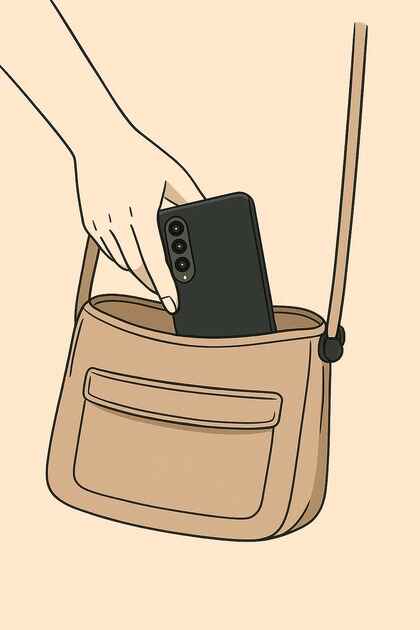
👜 In the Bag
👉For maximum safety, place the QuantaCase inside a bag or purse with the front shielded cover facing toward you. This ensures the shielding layer remains between you and the phone, reducing radiation exposure. For men, using a briefcase or any bag is preferred over carrying the phone in your pocket. Always disable unnecessary transmitters, such as Bluetooth and Wi-Fi, before stowing the phone away.
.png)
In-Car: On Dash Not Seat or Vent
👉Use a dashboard phone holder that props a smartphone with its rear facing the windshield. By directing the phone’s main RF-emitting surface outward, the mount is intended to reduce radio-frequency (RF) reflections back into the cabin—especially useful when phones transmit at higher power (weak signal or heavy data use). The design recognizes that metal-lined, enclosed spaces (cars, buses, RVs) can act like reflective cavities, concentrating RF energy in the passenger area (a Faraday-cage effect). Actual exposure reduction will vary with phone model, transmit power, signal strength, and vehicle materials, but orienting the phone away from occupants can help minimize reflected microwave exposure inside the vehicle. dashboard phone holder
.jpg)
👉QuantaCase™ — Physics‑First EMF Case
👉What it is: QuantaCase™ is an ultra‑thin, antenna‑aware folio that uses directional shielding between you and the phone. It is free of metal loops, magnets, and steel plates and features a shielded speaker opening for the 5G era—engineering choices that avoid antenna detuning and the transmit‑power increases that can come with it.
Why it matters: Gimmicky “anti‑radiation” designs can obstruct radios and push phones to work harder. QuantaCase™ follows the physics: keep radios efficient, place the shield on the user side, and stay thin near antenna zones. Many models also include RFID‑blocking storage for cards.
How to use: For calls, flip the cover toward your head. For carry, place the shielded cover toward your body. Turn off radios you don’t need (Wi‑Fi/Bluetooth/Hotspot) to cut duty cycle in everyday use.
Learn more about QuantaCase™
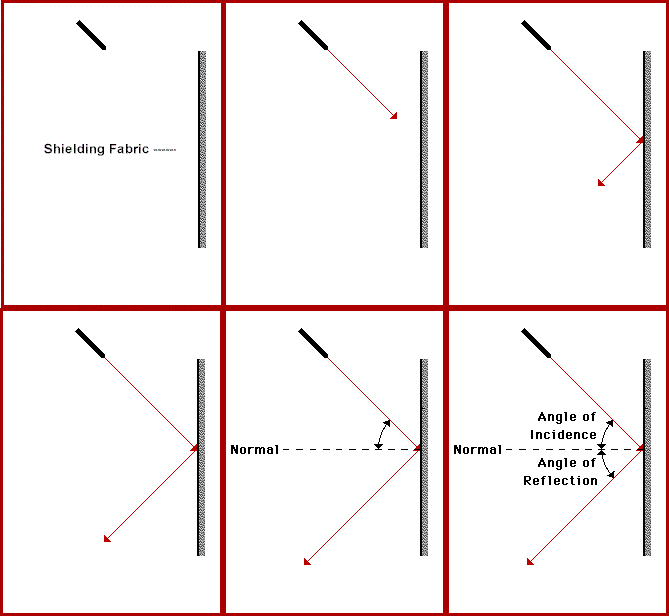
How RF Shielding Fabric Works
The “99%” shielding fabric works because it behaves like a very thin metal surface. When RF hits it, free electrons in the metalized threads are pushed into tiny currents that create an opposing field. That cancels the field on the protected side and reflects most of the energy away, so far less penetrates toward your body. The “fabric” is not magic cloth; it’s a 2D conductive sheet built by weaving polyester with micro-fine metalized filaments (often silver, copper, stainless steel, or alloys). Electrically, that weave behaves very much like a continuous conductor at RF wavelengths, because: The spacing between conductive threads is much smaller than the wavelength of the radiation. To the incident wave, it looks like a quasi-continuous conductive surface with some finite sheet resistance. So from Maxwell’s point of view, you’re looking at a thin conductor, not a porous textile.
One case, one habit: shield between you & the phone.
TruthCase™ is the RF SAFE design built to point out what others got wrong — detachable magnet plates, big ear-side holes, thick card stacks and metal loops that can detune antennas and drive phones harder. It’s here to train orientation, reduce exposure in real life, and give parents a language for demanding safer environments for their children.