In an era defined by near-ubiquitous wireless connectivity, few questions spark more heated debate and concern than “Could cell towers be linked to childhood cancer?” For parents, the question isn’t academic—it’s deeply personal. When you see a cell tower looming above a nearby elementary school, or discover that multiple children have been diagnosed with cancer in the same area, alarm bells ring. The stakes are high: we’re talking about the health and well-being of our children and communities.
This article delves into a controversial case in California, where families at an elementary school faced multiple childhood cancer diagnoses they believe may be linked to a cell tower on school property. We draw from an eye-opening CBS news report (transcript included) showing the real fears and heartbreak parents experience— and the difficulty of navigating a regulatory environment that often seems stacked against them.
We then connect these parents’ experiences to broader issues of wireless radiation, outdated FCC safety guidelines, and unconstitutional laws such as Section 704 of the Telecommunications Act (1996). Finally, we explore the story of seven-year-old Melanie Coates, a Florida student whose desk is a mere 465 feet from a high-power cell tower. Her plight underscores the urgent need for policy reform and accurate, science-based protections—especially for children.
By the end of this comprehensive blog post, you’ll have a deeper understanding of:
- Why the risk of non-thermal RF radiation matters, especially for kids.
- How Section 704 silences local communities and parents.
- What everyday citizens can do to push for change, enforce existing health laws, and adopt safer technology practices.
Embedded Video: CBS News Report
Below is a CBS news segment detailing a California elementary school where a cell tower was shut down after multiple children were diagnosed with cancer. Click to load and watch.
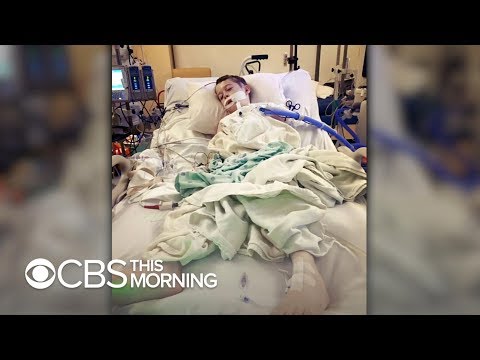
Childhood Cancer and the California Elementary School Case: A Closer Look
The Transcript in Focus
The story begins with a CBS news segment detailing a California elementary school where Sprint shut down a cell tower after several families linked it to recent childhood cancers. Key points from the report:
- 0:00–0:10: Introduction—an elementary school where a cell tower is suspected of causing cancer.
- 0:11–0:32: Sprint turned the tower off despite meeting federal safety standards, planning to relocate it.
- 0:33–1:05: Parents describe their children’s cancer diagnoses (kidney cancer, brain cancer).
- 1:06–1:45: Mothers suspect the tower’s RF emissions; "something is not okay."
- 1:46–2:01: Sprint insists the tower operates below federal limits; parents unconvinced.
- 2:02–2:45: Oncologist calls for more epidemiological data; acknowledges inconclusive research.
- 3:46–4:07: Parents vow to fight until the tower is gone.
Parents’ Anguish and the Cell Tower Debate
For these families, the fear is that invisible RF waves—deemed “safe” by FCC standards—may still pose health risks when children are chronically exposed. Regulatory compliance does not necessarily guarantee long-term safety, especially for children. The tower, they argue, does not belong on school grounds if there’s any chance it contributes to a higher incidence of cancer.
Key takeaway: A mismatch exists between official safety assurances and real-life parental concern—where anecdotal evidence meets incomplete or underfunded research on long-term health effects.
Dissecting the Radiation Risk: What Science Tells Us
RF Radiation 101
Radiofrequency (RF) radiation is non-ionizing, meaning it doesn't have enough energy to ionize atoms. However, research indicates non-ionizing exposures can still cause biological stress via oxidative damage, altered cell signaling, or hormonal disruptions.
Thermal vs. Non-Thermal Effects
Government safety guidelines focus on thermal effects—if the radiation doesn’t significantly heat tissue, it’s considered safe. Yet a vast body of peer-reviewed science points to non-thermal effects at levels well below the threshold for heating:
- Oxidative Stress: Potential DNA damage and increased cancer risk.
- Cell Membrane Permeability & Ion Channel Disruption.
- Gene Expression Changes linked to tumor promotion or neurological issues.
Children’s Unique Vulnerabilities
Children absorb more RF radiation relative to their size due to thinner skulls and developing tissues. They also face a longer lifetime exposure window. Current U.S. guidelines do not differentiate between a child’s developing body and an adult’s.
Studies at a Glance
- National Toxicology Program (NTP): Found “clear evidence” linking RF radiation to tumors in rats.
- Ramazzini Institute: Observed tumor formation at levels 60x below FCC limits.
- BioInitiative Report: Over 1,800 peer-reviewed studies indicating current safety standards ignore non-thermal effects.
The Legal and Regulatory Quagmire: Section 704 and Public Law 90-602
Section 704 of the Telecommunications Act (1996)
This provision bars local governments from rejecting or delaying cell towers based on health concerns, effectively muzzling communities:
- Preempts local authority: No official mention of health data in zoning disputes.
- Violates constitutional rights, argue critics, limiting free speech (First Amendment) and states’ rights (Tenth).
Public Law 90-602 & Defunding the EPA
Enacted in 1968 to require ongoing research and regulation of radiation hazards. By 1996, the EPA was defunded for RF research, leaving the FCC—an engineering agency—to set exposure limits without modern biological data.
Melanie’s Story: A Seven-Year-Old Caught in the Crossfire
465 Feet Away: Meet seven-year-old Melanie Coates in Seminole, Florida. Her desk is just 465 feet from a high-power cell tower. Contrast that with the BioInitiative Report’s recommendation of at least 1,500 feet to reduce exposure and potential cancer risk.
Melanie’s parents, like the California families, discover that Section 704 prevents citing health data in local disputes. Even if they have expert opinions, local boards often say, “We can’t consider health issues—it's out of our jurisdiction.”
This underscores the tragedy of a law that blocks communities from prioritizing the well-being of their children.
Conclusion
The California elementary school families battling multiple childhood cancers are not alone. While scientific consensus remains complex, peer-reviewed research increasingly suggests the need for caution, particularly around children’s exposure to RF radiation.
Yet, U.S. regulations have stagnated. Section 704 (1996) prohibits local health-based arguments against towers, and Public Law 90-602—requiring ongoing radiation research—goes unenforced. The FCC clings to thermal-only guidelines from a bygone era, ignoring numerous studies on non-thermal effects.
Real families—like those in California or the Coates family in Florida—are left wondering if an invisible force threatens their children’s health. Their voices are often drowned out by bureaucracy and lobbying. Here’s what must change:
- Reevaluate FCC Guidelines: Include non-thermal biological effects.
- Repeal or Amend Section 704: Restore communities’ rights to safeguard schools.
- Fund EPA & NTP: Enforce Public Law 90-602 for current, comprehensive RF research.
- Adopt Safer Tech: Wired connections, Li-Fi, 1,500-foot tower setbacks near schools.
Ultimately, protecting children isn’t just a right—it’s a duty. Spread this information, contact representatives, and demand policy that prioritizes public health in the wireless age. Because every child, like Melanie in Florida or the kids in California, deserves a safe place to learn and grow—free from an avoidable shadow that could threaten their health and future.